

to cave
 4
7.5
4
7.5

- verb
- /keɪv/
- Vibrations from the construction site can make the old building's walls cave inward if they are not reinforced.
Examples
-
The room caved in on me, with its green walls and white light.
Fiction book (1990) -
Barely has she taken this in when the ground caves in under her!
Fiction book (1990) -
The mountains and safety are barely a mile away when the earth caves in!
Fiction book (1990) -
Stage V: The banks continue to cave into the stream, widening the channel.
Academic text (2003) -
He knocked out all his sparring partners, smashed up the ring... and he hit the heavy bag so hard that the ceiling caved in.
-
After the flood receded, the results were obvious: vast tracts of land had caved into the flood, and the arroyo channels had moved hundreds of feet.
Academic text (1990) -
Heavy rains caused the hillside to cave in, blocking the road with mud and debris.
-
The river's relentless flow began to cave the rocky bank, altering its shape over time.
Synonyms
 10
6.0
10
6.0
To make a hole by removing earth or rock
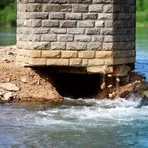 8
6.8
8
6.8
Remove the ground or support under something so it becomes weak

Make a deep hollow inside rock, like a tunnel
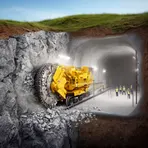
To make a large empty space by hollowing rock or ground
Antonyms

Phrasal Verbs



Compounds






- Specialized
A small bat with large ears that lives in caves in the southwestern United States and Mexico

- Literature
A safe place where people who are sad or in trouble meet and find support

A large sea cave on the island of Staffa in Scotland with tall dark rock columns and strong echoes

A national park in Kentucky with a very large cave system and an underground river

How Deep

Surface Forms
Etymology
Cave (to hollow out) comes from the root cavus 'hollow', the same root in cavity and concave, so when water or wind 'caves' rock they make a hollow.