

cave bat
- noun
- /keɪv bæt/
- The cave bat flew silently through the dark.
Examples
-
The cave bat is well-adapted to living in dark underground spaces.
-
Researchers spotted several cave bats roosting together in the limestone cavern.
-
A cave bat uses its large ears to detect prey in total darkness.
-
Many cave bats hibernate during the winter months.
-
The researchers observed a group of cave bats hanging from the ceiling of the dark cave.
-
At dusk, the cave bats emerged to hunt insects fluttering near the entrance.
-
The documentary highlighted the unique features of the cave bat, particularly its large ears adapted for echolocation.
Synonyms

A light yellow bat with big ears that lives in caves and eats insects
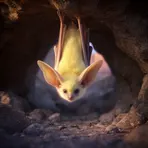
A bat with large ears and pale yellow fur that lives in western North America caves
Surface Forms
Morphology
The compound is transparently compositional: 'cave' specifies the habitat and 'bat' names the animal, so the meaning 'a bat that lives in caves' follows directly from the constituents. This noun+noun modifier pattern is common cross-linguistically and would be readily inferable by a B1 learner who knows both words.
Etymology
The noun cave bat names a bat that lives in a cave. Imagine a small, drab yellowish bat hanging on the cave wall, using its large ears like a radar to find food in the dark. That's why the name means 'a bat that lives in caves'.

