

to bust up
 34
5.8
34
5.8

- phrasal verb
- /bʌst ʌp/
- Informal
- He decided to bust up the old furniture to make space in the garage.
- busting up cars
- busted up the guy
- busting up a house
Loading YouTube…
Watch on YouTubeYou get hit by a car and you're all crunched up, bleeding, all your bones are busted up and you're dying.
- You get hit by a car and you're all crunched up, bleeding, all your bones are busted up and you're dying.
- So the actual pan works, but you gave it a one star review because the packaging from Amazon was busted up.
- He did the fling the table over while eating dinner or he bust a house up, break the whole house up from soup to nuts.
- And now, you know, just my eye painted gone out, my hair was sprayed out and my my Raggedy Ann outfit was all busted up look more like a dress.
Examples
-
You buy it, bust it up, and sell it in pieces.
Academic text (1995) -
You'll bust up your whole career if you do that.
-
If you were a guy, I would have busted you up good.
-
Everything is busted up around here.
-
The barn got busted up pretty bad.
-
The only way to stop him is to bust up his software module.
-
Don't make me bust you up again.
-
We went over to Johnnie's place just to check it out, and it was busted up badly.
Fiction book (1996) -
It's not just bank windows being busted up downtown, so don't even try to lie.
Blog text (19) -
Johnny stopped briefly to poke among stuff that had washed up on shore: old lobster buoys, busted-up traps, pieces of weathered planking.
Fiction book (1999)
Synonyms
 ∞
1.0
∞
1.0
To change a large bill into smaller bills
 ∞
1.0
∞
1.0
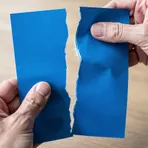
To pull something so it breaks into pieces
 553
4.0
553
4.0
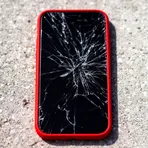
To break something so it does not work
 534
2.7
534
2.7
To cause something to explode violently
 481
2.2
481
2.2
To hit something with great force and cause damage
 401
1.6
401
1.6
To press something hard so it breaks or loses its shape
 311
2.1
311
2.1
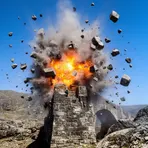
To break something into many pieces using great force
 225
2.9
225
2.9
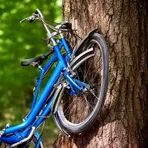
To badly damage or destroy something
 167
2.3
167
2.3
Break suddenly and completely, often with a sharp noise
 164
1.4
164
1.4
Break open suddenly because of pressure inside
 127
1.9
127
1.9
To make a sudden sharp sound like something breaking
 95
6.8
95
6.8
To break open suddenly and violently
 91
4.7
91
4.7
To break a hard object, for example a bone or rock
 72
2.8
72
2.8
To break suddenly into many small pieces, like glass
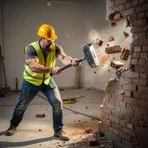 64
3.8
64
3.8
To break or remove something by force, often by hitting it
 57
3.2
57
3.2
Make a building or wall fall down suddenly
 30
8.7
30
8.7
To severely damage something so it cannot be used
 13
2.1
13
2.1
To open something suddenly by force, for example a locked door or jar
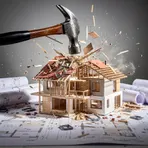 11
4.1
11
4.1
To completely destroy something, often hopes or plans
 9
3.5
9
3.5
To break a piece from something with a quick, sharp movement
 8
7.6
8
7.6
Damage something badly, often by hitting or dropping it
 8
2.8
8
2.8
To tear something into small pieces
 7
1.8
7
1.8
To break something violently into pieces
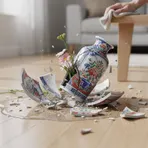 5
4.7
5
4.7
To damage something very badly so it breaks into pieces
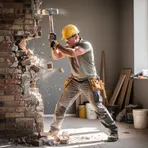 1
9.9
1
9.9
To break something or do something with great energy


 1
9.1
1
9.1
To break something into pieces
 1
7.1
1
7.1
Force a door open by hitting it hard

Make something stop working by hitting or dropping it

To divide something into parts, for example by cutting it or by sharing it among people
Antonyms


How Broken
- US
15
7.6
 72
2.8
311
2.1
72
2.8
311
2.1
- Informal
34
5.8
∞
1.0
311
1.0
Surface Forms
Morphology
bust + up
The meaning is transparently built from 'bust' (to break or damage) plus the particle 'up', which here signals breaking into pieces or completion/intensification; together they yield 'smash or break forcefully'. This verb+particle composition is a regular, predictable English pattern and would be understandable to a B1 learner who knows the constituents.
Etymology
Bust up comes from the simple image of breaking something into pieces: bust means to break and up shows it is broken all the way. So, it now means 'to smash or break'.