
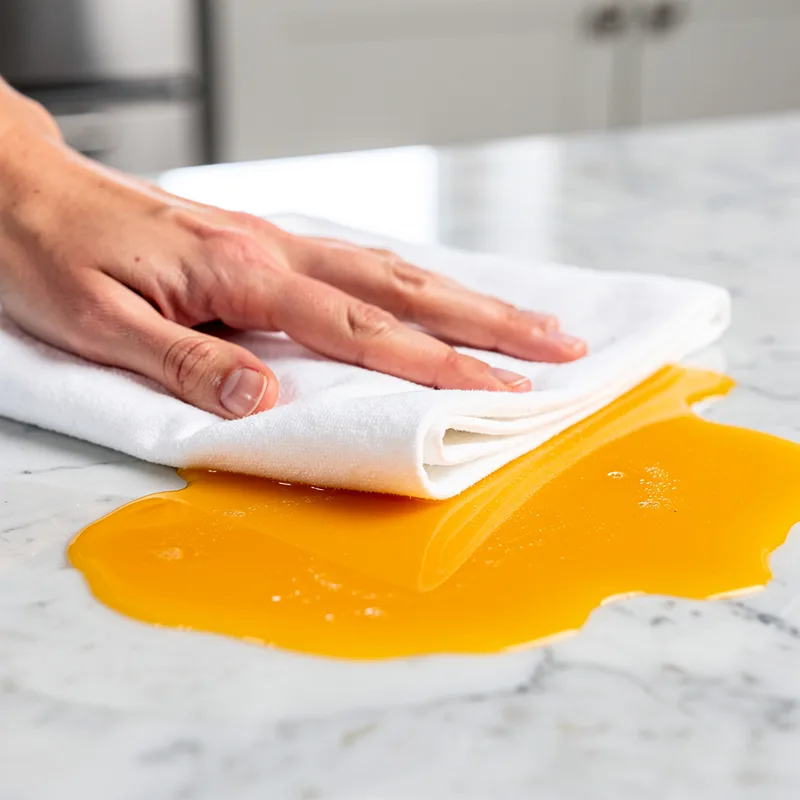
to wipe up
 8
1.8
8
1.8

- phrasal verb
- /waɪp ʌp/
- Laurie laughed, grabbed a napkin, and wiped up the spilled wine.
- wipe up spills
- wipe up this mess
- wipe up the puddles
Examples
-
Ball boys quickly wipe up the blood with mops.
Fiction book (1996) -
He's using the bread to wipe up the olive oil from the plate.
Fiction book (1997) -
You might want to wipe that up.
-
Better get something to wipe it up, son.
-
Maybe you should wipe it up.
-
I'm gonna wipe up this water.
-
And wipe up what you tracked onto my floor.
-
Close your mouth and go get a rag and wipe up that floor!
Fiction book (2001) -
As Kate wipes up the table, Charlie notices her ring.
Fiction book (2001) -
She used a paper towel to wipe up the spilled juice on the table.
Synonyms
 ∞
1.0
∞
1.0
To remove dirt and stains
 531
1.0
531
1.0
To clean and dry a surface by rubbing it with a cloth or your hand
 433
1.0
433
1.0
To make a room or area free of dirt and tidy by removing mess
 37
1.0
37
1.0
To clean a floor with a long handle and wet cloth
 28
2.0
28
2.0
To remove something from a surface by moving a cloth over it, like tears or dirt
 20
1.0
20
1.0
Remove dirt or marks from a surface by rubbing with a cloth
 13
2.6
13
2.6
To take in liquid completely like a sponge or cloth
 5
2.6
5
2.6
To remove liquid or dirt from a floor with a cloth
 4
2.1
4
2.1
To clean up liquid by using a soft thing that soaks it up
 1
3.3
1
3.3
To absorb liquid using a sponge, cloth, or piece of bread


 1
1.0
1
1.0
To remove dirt or mud from a surface
 1
3.7
1
3.7
To take liquid from a surface using something like a cloth
Antonyms

How Clean
8
1.8
 531
1.0
531
1.0
Surface Forms
Morphology
wipe + up
The meaning 'to clean a surface by wiping away a spill' is directly derived from 'wipe' (to remove dirt or moisture by rubbing) combined with the particle 'up', which here signals removal or completion of the action. This is a regular verb+particle construction that is compositional and commonly used in English, so a B1 learner who knows the constituents will readily infer the meaning.
Etymology
Wipe up comes from the simple action of using a cloth to wipe a spill and pull it up into the cloth. So wipe up means 'to clean a surface by removing a spill or mess'.