

wild pumpkin
- noun
- US
- The wild pumpkin thrives in arid landscapes, where its tough fruits go uneaten by animals.
Examples
-
Despite its name, the fruit of the wild pumpkin is not suitable for human consumption.
-
Botanists studied the resilient wild pumpkin as a model for drought-tolerant plants.
-
Look at that wild pumpkin!
-
The wild pumpkin grows in arid climates.
-
The wild pumpkin thrives in arid landscapes, where its tough and inedible fruits remain untouched by animals.
-
Despite its name, the fruit of the wild pumpkin is small, hard, and not edible for humans.
-
Botanists studied the wild pumpkin for its ability to survive in dry conditions, showcasing its resilience.
Synonyms

A vine that grows in dry areas and has small hard green fruits not eaten
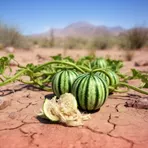
A vine from dry North American regions with small hard fruits that look like tiny watermelons and are inedible

A long-lived vine from dry central and southwestern US and Mexico that has small hard green-and-white fruits not for eating
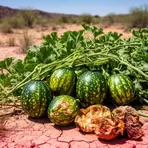
A wild vine that lives many years and makes hard, spotted green fruit not for eating
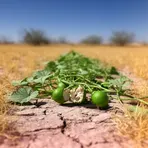
A vine that grows in dry fields and makes small hard green fruits that are not edible
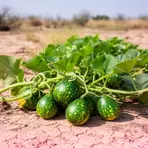
A vine from central and southwestern United States and Mexico that makes small hard spotted green fruit you cannot eat
How Big


Surface Forms
Morphology
wild + pumpkin
The meaning is directly compositional: 'wild' (growing naturally, untamed) modifies 'pumpkin', so a B1 learner who knows both words can infer it denotes a pumpkin growing in the wild or an undomesticated pumpkin. This adjective+noun pattern is a standard, cross-linguistic way to form such meanings, making it immediately comprehensible.
Etymology
Wild pumpkin may come from a simple picture: a vine that grows 'wild', meaning without people, and that makes small hard fruits that look like a garden pumpkin. So the name tells us it is a pumpkin-like plant that grows in nature and is often 'inedible'.