
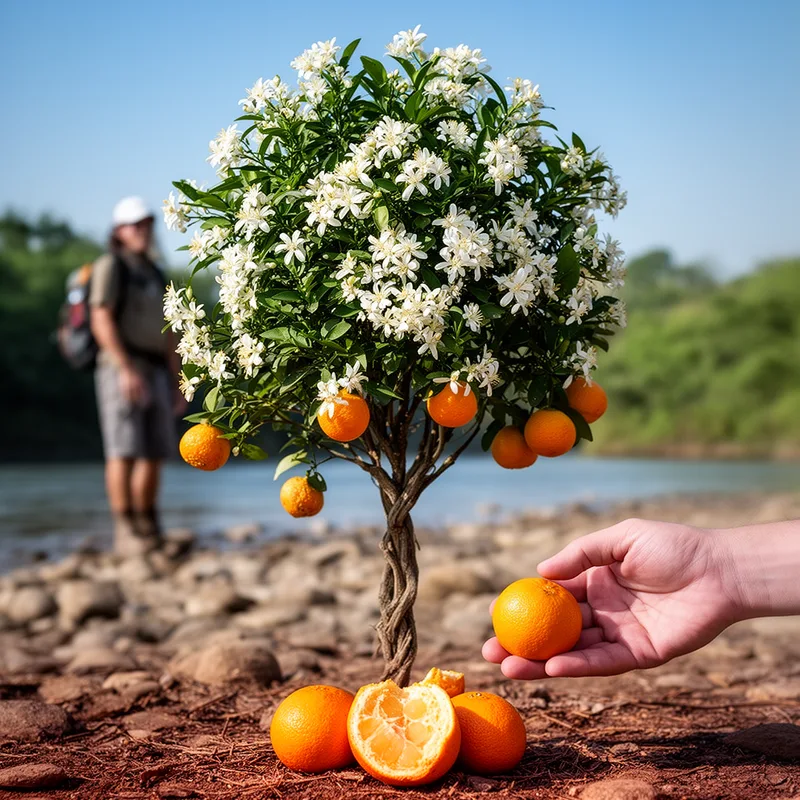
wild orange


 1
8.5
1
8.5
- noun
- /waɪld ˈɔrɪndʒ/
 :
naranja silvestre
:
naranja silvestre
- The garden was filled with the sweet smell of wild orange flowers blooming in the spring.
Orange blotches the wild orange trees, garbled green the lime trees.
- Orange blotches the wild orange trees, garbled green the lime trees.
Examples
-
I remember pickin' a wild orange at the edge of the woods surrounding our house.
-
Orange blotches the wild orange trees, garbled green the lime trees.
-
It was mid-spring, and the sweet fragrance of wild orange flowers filled the house.
Fiction book (1996) -
We planted wild orange as rootstock for grafting our other citrus trees.
-
The wild orange tree, with its glossy leaves and fragrant blossoms, attracted many pollinators.
Synonyms
 1
5.0
1
5.0
A tree that makes bitter oranges used as root for other orange trees and for marmalade
 1
6.5
1
6.5
A bitter sour orange used to make marmalade and to grow other citrus trees

A small thorny Chinese tree with inedible orange fruit used as a base for citrus trees or hedges

A small thorny Chinese tree with scented flowers and inedible fruit used for grafting and hedges

A small spiny Chinese tree with scented flowers and decorative inedible fruit used for hedges and as rootstock
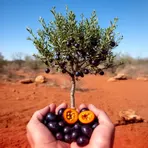
A small Australian tree that grows dark purple fruit people eat, called wild orange
An orange tree with bitter fruit used for marmalade and flavoring
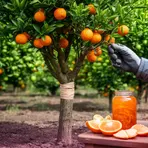
A type of orange tree that produces small sour fruit and is used for grafting and marmalade

A tree that produces sour oranges used for marmalade and grafting
Surface Forms
Morphology
The compound is a straightforward composition of 'wild' (uncultivated, living in nature) + 'orange' (the orange tree/fruit), so a B1 learner who knows both words will readily infer it refers to an uncultivated or wild-growing orange tree (often with less edible/bitter fruit). There is no idiomatic or metaphorical shift—botanical specifics like use as rootstock are specialized information but do not block basic comprehension.
Etymology
The noun wild orange names a small tree with sweet-smelling flowers and orange-like fruit that is usually bitter and 'not for eating'. The name comes from the simple picture: wild because it grows on its own and orange because the fruit looks like an orange, and farmers often use it to help grow other orange trees.