

Seville orange


 1
6.5
1
6.5
- noun
- For the best marmalade, you should always use Seville oranges because their bitterness gives it a unique flavor.
Examples
-
If you want a traditional British recipe, make sure to include Seville oranges in your marmalade preparation.
-
Um, this is orange, made with real Seville oranges.
-
You can find Seville oranges at specialty grocery stores, especially during the winter months when they are in season.
Synonyms
 1
5.0
1
5.0
A tree that makes bitter oranges used as root for other orange trees and for marmalade
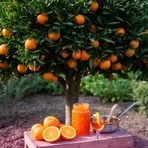
An orange tree with bitter fruit used for marmalade and flavoring

A small orange tree that makes sour fruit used for marmalade and to start new orange trees

A small, very sour orange used to make marmalade and flavoring

A bitter orange used in cooking, especially for marmalade and sauces
Surface Forms
Morphology
The meaning is directly compositional: 'Seville' (a place) + 'orange' (the fruit) indicates an orange associated with Seville, i.e. a varietal/origin-based fruit. This place-name + noun pattern is cross-linguistically common, so a B1 learner who knows both constituents will understand it denotes a kind of orange (though they may not infer the specific bitterness or culinary uses without extra knowledge).
Etymology
Seville orange gets its name from the city of Seville in Spain, where this bitter, sour orange was commonly grown. Because its strong peel and sharp juice are perfect for making 'marmalade' and its trees are often used as 'rootstock' to support other citrus, the name now means the bitter orange used for those purposes.