
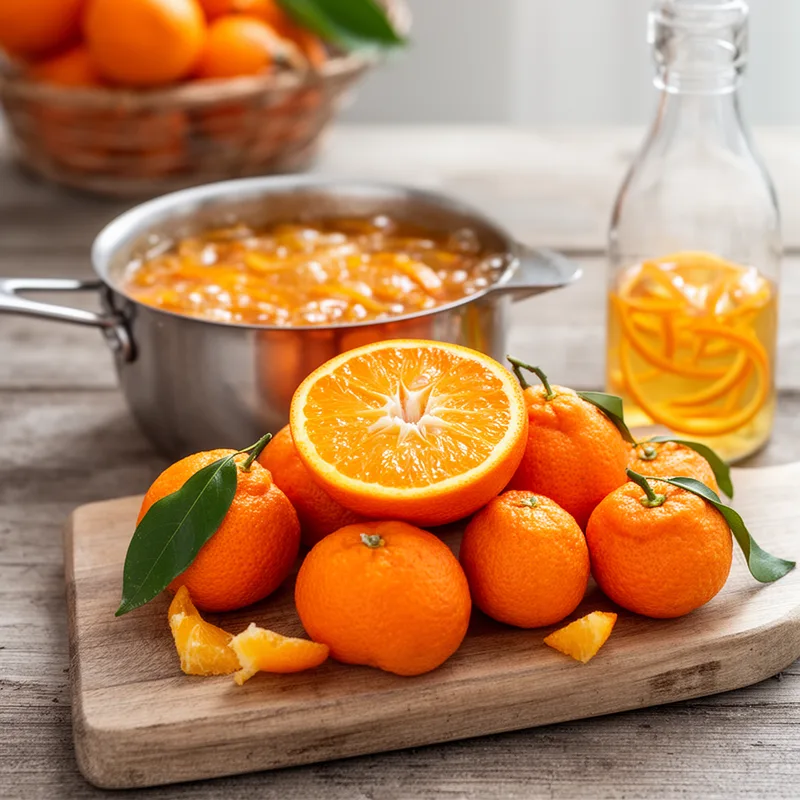
bitter orange
- noun
- /ˈbɪtər ˈɔrɪndʒ/
- Have you ever tasted bitter oranges?
Examples
-
I love making bitter orange marmalade.
-
Some herbal supplements contain extracts from bitter orange peel.
-
Farmers harvested a large crop of bitter oranges this season, destined for preserves and liqueurs.
-
The traditional recipe for English marmalade uses bitter orange for its distinctive flavor.
-
Bitter oranges are often used in recipes for making traditional marmalade.
-
Chefs sometimes use bitter orange to add a unique flavor to savory dishes.
-
The bitter oranges harvested in the fall are known for their distinctive sourness.
Synonyms


 1
6.5
1
6.5
A bitter sour orange used to make marmalade and to grow other citrus trees
 1
3.7
1
3.7
A very tart orange used in cooking and for making marmalade

An orange tree with bitter fruit used for marmalade and flavoring

A bitter orange used in cooking, especially for marmalade and sauces
Antonyms

How Sweet

Surface Forms
Morphology
The noun phrase denotes an orange (or orange tree/fruit) that has a bitter taste, which is directly and literally composed from 'bitter' (having an unpleasant/acrid taste) + 'orange' (the fruit/tree). This straightforward compositional meaning is cross-linguistically common and follows normal adjective + noun patterns, so a B1 learner who knows both constituents will readily infer the MWE's meaning.
Etymology
Bitter orange is named for the fruit's strong taste: bitter means a sharp, sour taste and orange is the fruit. Because the fruit is very sour and full of aroma, people use it for 'marmalade' and flavoring, so the name now means the sour orange used in preserves.