
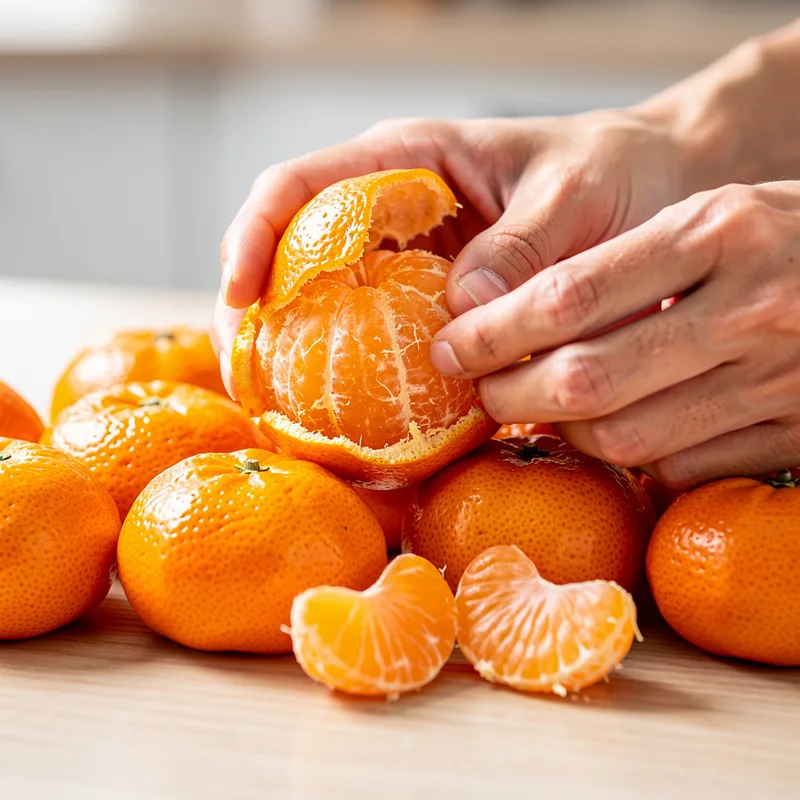
mandarin
 5
1.3
5
1.3

- noun
- /ˈmændərɪn/
- He picked a sweet mandarin from the tree and enjoyed its juicy flavor.
- mandarin orange
Loading YouTube…
Watch on YouTubeOK, Top notes here are Mandarin, Peach, Lily, amber and Musk.
- OK, Top notes here are Mandarin, Peach, Lily, amber and Musk.
Examples
-
No, that's actually a really mild mandarin orange.
-
In the morning, Sylvia eats only a little mandarin orange.
Fiction book (1994) -
And she eats a mandarin orange before she leaves in the morning.
Fiction book (1994) -
The juice of mandarin oranges?
Fiction book (1996) -
We didn't finish it three days ago and stuck it in the fridge, leaving no room for the box of mandarin oranges.
Fiction book (1992) -
My grandmother raised produce in her garden: mandarins, kumquats, tomatoes, and cauliflower.
Fiction book (2001) -
The day after the first snow, I stand in the canned fruit and vegetable aisle, looking at the cans of mandarin oranges in the cart.
Fiction book (1998) -
Tangerines, more correctly known as mandarin oranges, are the sweetest citrus of all.
Blog text (24) -
Arriving at their camp in the Sahara Desert, the Germans pitched their tents, then relaxed in the sun drinking coffee and eating mandarin oranges.
Fiction book (1996) -
I've done similar and added toasted salted walnuts, mandarin orange slices, and slivered jalapenos.
Blog text (4)
Synonyms
 13
1.0
13
1.0
A small sweet orange fruit with skin you can peel easily
 1
2.3
1
2.3
A small sweet orange fruit that is easy to peel
 1
8.6
1
8.6
A sweet mandarin orange with thin skin that is easy to peel
A small tree that makes sweet mandarin oranges with thin, easy to peel skin
A small tree from Southeast Asia that grows sweet, easy-to-peel orange fruit

A small evergreen tree that produces sweet orange fruit like mandarins
Compounds
 1
3.7
1
3.7
The main form of Chinese spoken in Beijing and used as China's official language



The main form of Chinese spoken in Beijing and used as China's official language
A small tree from Southeast Asia that grows sweet, easy-to-peel orange fruit

How Sweet

Surface Forms
Etymology
Mandarin for the fruit probably comes from Portuguese mandarim, because people thought the fruit's bright orange skin looked like the bright 'robes' worn by Chinese mandarins. A helpful way to remember it is to think of the orange fruit and the orange robe as the same colour.