
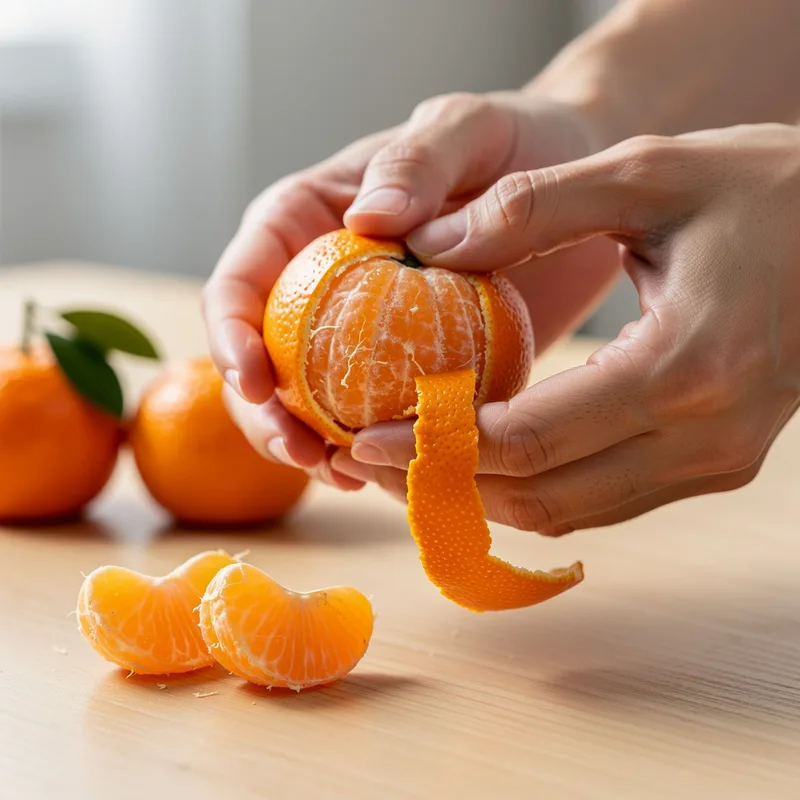
mandarin orange
 1
2.3
1
2.3

- noun
- /ˈmændərɪn ˈɔrɪndʒ/
- The fruit salad included slices of mandarin orange, giving it a sweet and tangy flavor.
- mandarin oranges salad
- mandarin orange juice
- mandarin orange segment
Examples
-
And that my youngest son would eat a whole box of mandarin oranges in one sitting if I didn't hide them...
Blog text (12) -
In the morning, Sylvia eats only a little mandarin orange.
Fiction book (1994) -
And she eats a mandarin orange before she leaves in the morning.
Fiction book (1994) -
We didn't finish it three days ago and stuck it in the fridge, leaving no room for the box of mandarin oranges.
Fiction book (1992) -
A mandarin orange and two rice balls sat on a plate, accompanied by a bottle of Kirin beer in front of the incense.
Fiction book (1998) -
She took the apples and fish from Granny without speaking, and then she brought them cups of tea and a bowl of mandarin oranges.
Fiction book (1996) -
Tangerines, more correctly known as mandarin oranges, are the sweetest citrus of all.
Blog text (24) -
Arriving at their camp in the Sahara Desert, the Germans pitched their tents, then relaxed in the sun drinking coffee and eating mandarin oranges.
Fiction book (1996) -
She peeled a mandarin orange and shared it with her friends at the picnic.
-
For a healthy dessert, we often enjoy a bowl of fresh mandarin oranges topped with yogurt.
Synonyms
 13
1.0
13
1.0
A small sweet orange fruit with skin you can peel easily
 7
2.9
7
2.9
A small sweet orange that is easy to peel and usually has no seeds
 5
1.3
5
1.3
A small sweet orange fruit with loose skin you peel
 1
3.9
1
3.9
A small sweet orange that peels easily and has few seeds
 1
8.6
1
8.6
A sweet mandarin orange with thin skin that is easy to peel
A small tree that makes sweet mandarin oranges with thin, easy to peel skin
How Sweet

Surface Forms
Morphology
The color sense is directly derivable from 'orange' (the hue) with 'mandarin' specifying the particular shade/source (the mandarin fruit rind), so the compound simply names a shade of orange based on a familiar object. This follows a common, cross-linguistic pattern of naming colors after objects or fruits, so a B1 learner who knows both constituents would readily infer the meaning.
Etymology
Mandarin orange may come from China, where the small sweet fruit was often given to Chinese 'mandarins', or officials, and so the fruit took their name. That's why the word now means a small, easy-to-peel orange fruit.