

sour orange


 1
5.0
1
5.0
- noun
- /ˈsaʊər ˈɔrɪndʒ/
- They often use sour oranges when making traditional marmalade for its unique bitter taste.
Examples
-
Quick-decline strains can rapidly kill trees on sour orange rootstock but do not affect trees on other types of rootstocks.
Academic text (1994) -
All sweet orange, grapefruit, and mandarin trees grown on sour orange rootstock are susceptible to quick decline.
Academic text (1994) -
In many Caribbean dishes, sour oranges are a key ingredient, adding a tart flavor to marinades.
-
For the recipe, you will need the juice of three sour oranges to enhance the dish's acidity.
Synonyms
 1
6.5
1
6.5
A bitter sour orange used to make marmalade and to grow other citrus trees
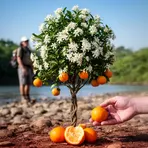 1
8.5
1
8.5
A small tree with fragrant flowers and bitter, inedible fruit
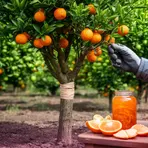
A type of orange tree that produces small sour fruit and is used for grafting and marmalade
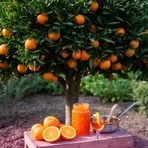
An orange tree with bitter fruit used for marmalade and flavoring

A tree that produces sour oranges used for marmalade and grafting

A small orange tree that makes sour fruit used for marmalade and to start new orange trees
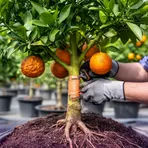
A type of orange tree that makes bitter fruit and is used to grow other orange trees
Surface Forms
Morphology
The adjective 'sour' (acidic/tart) combined with the noun 'orange' yields the straightforward compositional meaning 'an orange that tastes sour,' which matches the provided definition. This adjective+noun pattern is cross-linguistically common and follows regular English composition, so a B1 learner who knows both words will readily infer the MWE's meaning.
Etymology
Sour orange names a tree and its fruit with a sharp, bitter taste. Imagine a sour orange that makes your mouth pucker; because the tree is strong, gardeners often attach sweeter orange branches to its roots, so the name refers to both the tart fruit and the tree used for that purpose.