

to rub out
 1
4.3
1
4.3

- phrasal verb
- /rʌb aʊt/
- Even when you do drawing or if you do painting, you can maybe rub out little bits, but after a while you can only rub out so much.
- rub out a line
Loading YouTube…
Watch on YouTubeThere was people saying that if you voted in pencil to remain, to leave, that the election agents have been told to rub that out and put remain in pen.
- There was people saying that if you voted in pencil to remain, to leave, that the election agents have been told to rub that out and put remain in pen.
Examples
-
Now, don't rub it all out.
-
He's trying to rub it out.
Fiction book (2001) -
I quickly rubbed my cigarette out in the ashtray.
Fiction book (1993) -
You should have written "vint." Miss Waller frowns, glances at the board, and hastily rubs out the offending word.
Fiction book (1994) -
You can easily rub out pencil marks with a good eraser.
-
If there are any mistakes on your paper, just rub them out with a pencil eraser.
-
After the meeting, she quickly rubbed out the notes she had jotted down on her notepad.
Synonyms
 144
1.6
144
1.6
Remove marks, writing, or digital files so they are no longer visible
 62
1.2
62
1.2
To rub material off a surface with something hard or sharp
 28
2.0
28
2.0
To remove something from a surface by moving a cloth over it, like tears or dirt
 20
1.0
20
1.0
Remove dirt or marks from a surface by rubbing with a cloth
 8
3.7
8
3.7
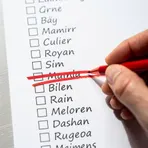
Remove a name or item from a list by drawing a line through it
 5
3.4
5
3.4
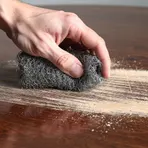
Come off a surface when something moves against it
 5
8.1
5
8.1
The surface wears away when something rubs or scrapes it
 4
4.0
4
4.0
Draw lines through writing so you cannot read it
 3
5.2
3
5.2
To rub a surface with a small rough tool to remove something
 2
8.1
2
8.1
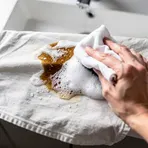
To remove something so it is no longer visible or remembered
 1
2.9
1
2.9
Get rid of a mark on clothes or other things by cleaning
 1
2.5
1
2.5
To remove dirt or stains by rubbing hard with a brush
 1
3.9
1
3.9
To cover writing with white fluid so it cannot be seen
 1
3.4
1
3.4
Remove a mark by moving a cloth or hand over it many times
 1
4.7
1
4.7
To remove the top layer of something by rubbing it with sandpaper

Remove marks or stains from a surface so it looks clean

To draw a line through written words to show they are wrong

To remove text from paper or a screen
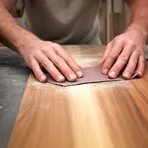
To make a surface smooth by moving something over it

Wear away the surface of something by rubbing or scraping
Antonyms

Surface Forms
Morphology
rub + out
The meaning 'to remove or erase by rubbing' is directly and compositionally derived from 'rub' (apply repeated pressure/motion) combined with 'out' (indicating removal or completion); the particle 'out' clearly signals taking something away. This verb+particle pattern is common in English and is easily inferable by a B1 learner who knows both constituents, so the expression is transparent.
Etymology
The phrasal verb rub out comes from the simple action of using an eraser to rub a mark out until it disappears. So, rub out means 'to erase' or 'remove by rubbing'.