
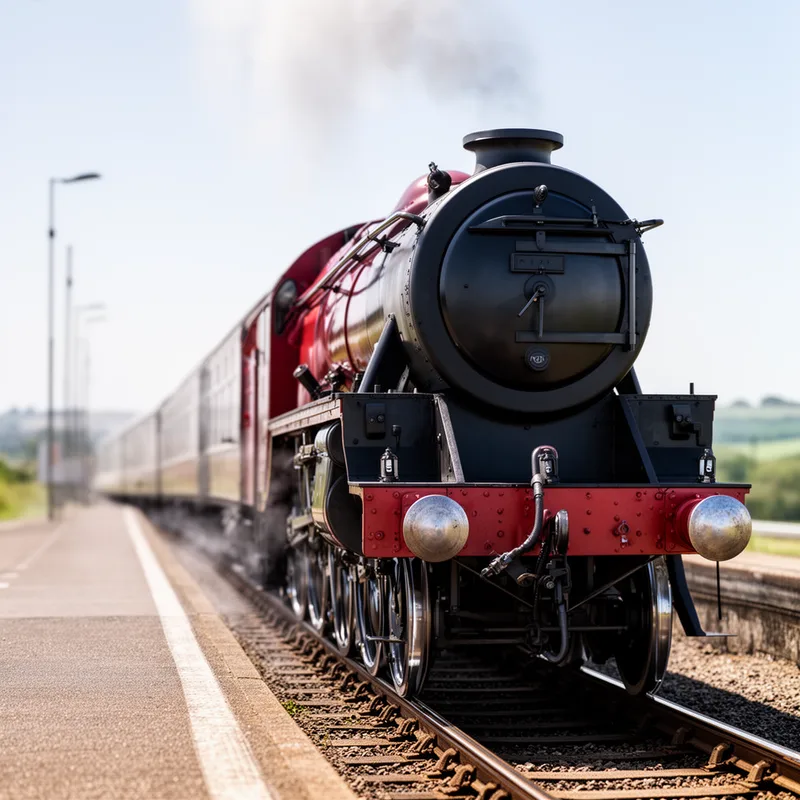
railway locomotive
- noun
- /ˈreɪlweɪ ləˈkoʊmɪtɪv/
- UK
- The railway locomotive pulled a long line of freight cars to the next station.
Examples
-
The museum displayed a vintage railway locomotive that was used in the early 20th century.
-
A modern railway locomotive can travel at speeds over 200 kilometers per hour.
-
Railway locomotives, which moved through the countryside, were the first big machines to broach people's consciousness.
Blog text (19)
Synonyms
 89
3.5
89
3.5

A vehicle that pulls train cars on railway tracks
 37
4.6
37
4.6
A train engine that pulls rail cars
 3
3.2
3
3.2
A train engine that uses steam made by heating water to move
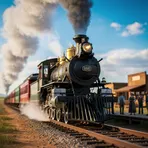 1
9.9
1
9.9
A steam train engine that pulled cars on rails in the 1800s
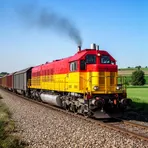 1
4.1
1
4.1
A railway engine that runs on diesel fuel rather than steam or electricity
 1
5.0
1
5.0
A steam train that carries its own fuel and water without another car behind it


 1
3.9
1
3.9
A train engine that runs on electricity from overhead wires or a third rail

A machine on train tracks that pulls or pushes trains
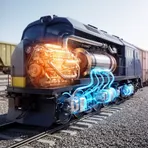
A train engine that uses a diesel engine to make electricity that runs its electric motors

A steam engine that carries its own fuel and water so it needs no separate car

A small vehicle that moves train cars inside a rail yard

A small vehicle that moves rail cars around in a rail yard

A train engine that goes ahead to check the track for obstacles
How Powerful
- UK

- Jargon
Surface Forms
Morphology
The meaning is directly and transparently derived from combining 'railway' (pertaining to trains/tracks) with 'locomotive' (a rail vehicle that provides motive power), so a B1 learner who knows both constituents will understand 'railway locomotive'. This simple noun+noun composition follows common cross-linguistic patterns and is not idiomatic or metaphorical, making it clearly compositional.
Etymology
Railway locomotive was named for a simple idea: a machine that moves itself on the rails of a railway. The word locomotive shows it is its own 'engine' that 'moves', so today railway locomotive means the self-powered engine that pulls and drives a train along the tracks.