

donkey engine
- noun
- /ˈdɔŋki ˈɛnʤɪn/
- Archaic
- The old donkey engine chugged back and forth, rearranging the freight cars.
Examples
-
He spent his career operating a donkey engine in the city's main switching yard.
-
The donkey engine moved the cars around the yard.
-
A donkey engine is essential for efficient operations in busy rail yards.
-
Many donkey engines are still in use today.
-
The small donkey engine worked tirelessly to organize the freight cars in the yard.
-
After years of service, the old donkey engine was finally replaced by a more modern locomotive.
-
Railroad workers rely on the donkey engine to efficiently switch cars between tracks.
Synonyms
 1
9.9
1
9.9

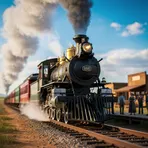
A steam train engine that pulled cars on rails in the 1800s
 1
5.0
1
5.0
A steam train that carries its own fuel and water without another car behind it

A small vehicle that moves train cars inside a rail yard
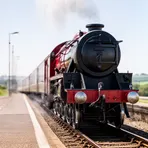
A large machine on wheels that pulls a train on tracks
How Powerful

Surface Forms
Morphology
The compound combines a familiar animal term and 'engine', so learners may infer it's an engine named after or likened to a donkey (suggesting smallness or auxiliary use). However, the specific nautical/technical meaning 'small auxiliary engine used on ships' is a specialized, metaphorical extension not fully predictable from the parts, so a B1 learner would only get a vague idea rather than the precise sense.
Etymology
Donkey engine comes from the picture of a small, strong helper animal, the donkey, doing slow, heavy work. Railway workers called a little locomotive that moves and arranges heavy cars in a yard a donkey engine, so it means 'a small switching engine'.