

pilot engine
- noun
- /ˈpaɪlət ˈɛnʤɪn/
- Archaic
- The railroad company sent a pilot engine ahead to ensure the track was clear after the storm.
Examples
-
Safety protocols required a pilot engine to precede passenger trains during harsh weather conditions.
-
A pilot engine led the main train through the mountainous region to check for landslides or obstructions.
-
The pilot engine checked the track for safety.
-
A pilot engine is crucial for train safety.
-
A pilot engine led the main train through the mountainous region to check for landslides or obstructions.
-
Safety protocols required a pilot engine to precede passenger trains during harsh weather conditions.
-
The railroad company sent a pilot engine ahead to ensure the track was clear after the storm.
Synonyms
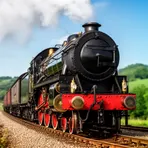
 89
3.5
89
3.5

A vehicle that pulls train cars on railway tracks
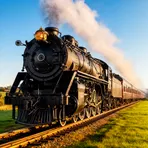 37
4.6
37
4.6
A train engine that pulls rail cars

A machine on train tracks that pulls or pushes trains
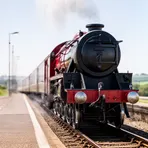
A large machine on wheels that pulls a train on tracks
Surface Forms
Morphology
The meaning 'a locomotive that runs ahead to check the track' is directly derivable from combining 'pilot' (one that leads or clears the way) with 'engine' (a locomotive). Although the term is domain-specific railway jargon, the compositional logic (a leading/clearing engine) is transparent and would be understandable to a B1 learner who knows both constituent words.
Etymology
Pilot engine comes from the idea of a pilot as a guide and an engine that runs in front of a train to look for problems on the track. So a pilot engine is sent 'ahead' to check for obstacles and dangers.