

locomotive engine
- noun
- /ˌloʊkəˈmoʊtɪv ˈɛnʤɪn/
- Mark Rosekind, a member of the National Transportation Safety Board, said a front-facing camera on the locomotive engine and dash cam video from a police cruiser revealed the new information.
Examples
-
The locomotive engine powered the entire train as it traveled across the countryside.
-
Analyses are normally performed on locomotive engines every 92 days, during regularly scheduled maintenance.
Academic text (2000) -
The Tedann Technology for on-board oil analysis on locomotive engines is an outgrowth of another R&D project at Pacific Northwest National Laboratory.
Academic text (2000) -
In the main engine room, there are two immense (taller than me) Fairbanks-Morse diesel engines, which are actual locomotive engines.
Blog text (7) -
Among the damaged equipment: nine dual-powered locomotive engines and 84 multi-level rail cars purchased over the past six years at a cost of about $385 million.
Blog text (28) -
Separately, EMD is developing dual-fuel locomotive engines as part of a two-year program with the Southwest Research Institute (SWRI) of San Antonio, Tex.
Academic text (1995) -
A skilled engineer maintained the locomotive engine to ensure it operated efficiently during the journey.
-
After a thorough inspection, they confirmed that the locomotive engine was ready for the long haul.
Synonyms
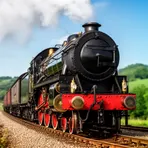
 89
3.5
89
3.5

A vehicle that pulls train cars on railway tracks
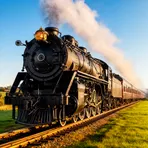 37
4.6
37
4.6
A train engine that pulls rail cars
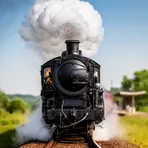 3
3.2
3
3.2
A train engine that uses steam made by heating water to move
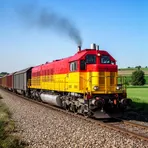 1
4.1
1
4.1
A railway engine that runs on diesel fuel rather than steam or electricity
 1
5.0
1
5.0
A steam train that carries its own fuel and water without another car behind it
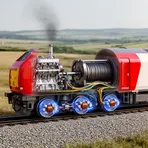

 1
5.5
1
5.5
A train engine that uses electric motors powered by a diesel engine
 1
3.9
1
3.9
A train engine that runs on electricity from overhead wires or a third rail
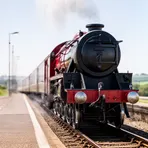
A large machine on wheels that pulls a train on tracks
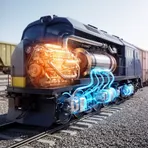
A train engine that uses a diesel engine to make electricity that runs its electric motors
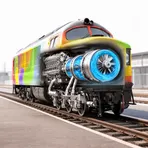
A train engine that uses a diesel engine and a hydraulic system to send power to the wheels
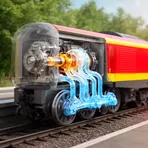
A train engine that uses a diesel motor and fluid pressure to drive the wheels

A steam engine that carries its own fuel and water so it needs no separate car

A train engine that goes ahead to check the track for obstacles

A small vehicle that moves train cars inside a rail yard
Surface Forms
Morphology
Both constituent nouns refer to the same domain (railway traction) and their combination simply specifies a rail vehicle that provides motive power; the overall meaning is directly predictable from knowing 'locomotive' and 'engine'. This noun–noun compositional pattern is common and cross-linguistically transparent, so a B1 learner who knows the parts will understand the MWE.
Etymology
Locomotive engine is named for what it does: locomotive comes from old words meaning 'move', and engine is a machine that gives 'power', so the name creates the image of a machine that moves or pulls a train. That's why it now means the vehicle that makes a train move.