
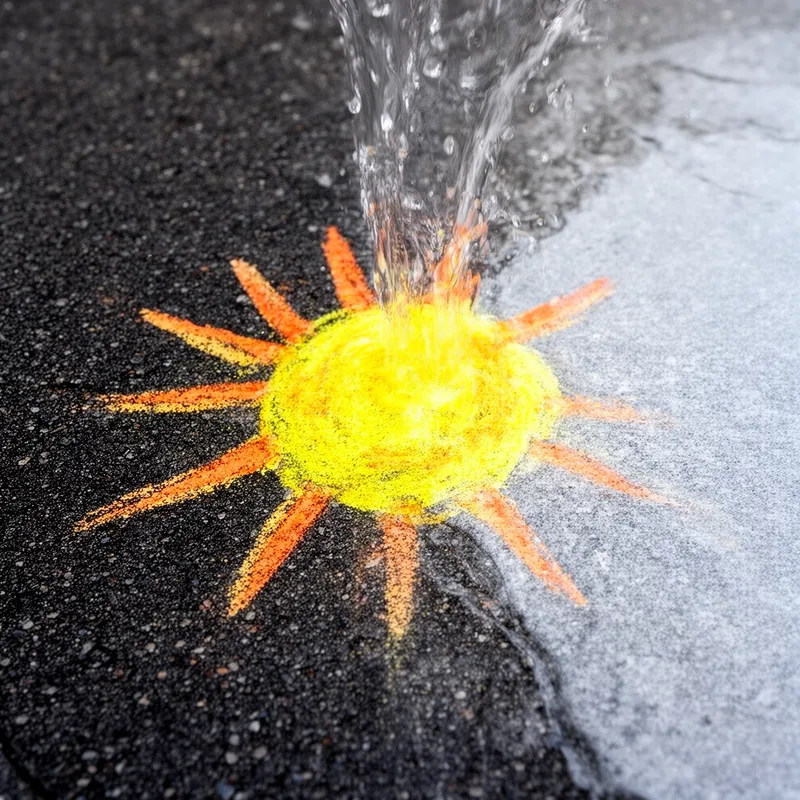
to obliterate
 71
7.5
71
7.5

- verb
- /əˈblɪtəˌreɪt/
- The powerful earthquake obliterated several buildings in the city, leaving nothing but rubble.
- obliterate all traces
- completely obliterate
- obliterate the memory
Loading YouTube…
Watch on YouTubeYou know, it's a shotgun, which then will just obliterate anything that triggers it.
- You know, it's a shotgun, which then will just obliterate anything that triggers it.
- I mean, we, we just, we, we can just obliterate these guys.
- White light burst through the window, floods through the window and obliterates everything.
- And then to shift out of that literally means to obliterate your reality and your identity, right?
- And then and come September, you know, half of my savings was, was obliterated.
- It's around the corner, and you should be nervous because you might get obliterated.
- So we know that the UAE is has essentially obliterated over the last decade its own civil society.
- All of my fundamental ontological assumptions about what isn't isn't possible had been uprooted, had been obliterated.
- And I think the Conservative Party, the new leader trusts, if she doesn't find answers to that, they're going to get obliterated at the next election.
- Vice President, when he visited East Berlin and said for here on either side of the Wall are God's children, and no man made barrier can obliterate that fact.
- A screen of pink, pink pink obliterates the shoehorn edge of epiglottis.
Examples
-
From the front porch, Belle watched the brown rising smoke obliterate the moon and stars.
Fiction book (1990) -
In 1900, one of the largest cities in the state, Galveston, was obliterated by a hurricane.
Academic text (2008) -
But again, the point is not to obliterate the skin, but to have you go, does it look better?
-
Many people felt that the government was trying to obliterate our culture by making the children attend school.
Academic text (1999) -
We have the men we need to obliterate the Romans, yet we do nothing.
-
Because it, it has the effect of completely obliterating the concept of any personal responsibility, right?
-
And one afternoon, a great meteor struck down from space and obliterated the central square.
Fiction book (1992) -
Mexico City has not stopped growing since its pre-Columbian glory was obliterated by the Spaniards.
Academic text (2008) -
Here the Mongols would pretend to retreat, sometimes over the course of days, before turning back to obliterate their disorganized pursuers.
-
The new law aims to obliterate any unfair practices in the housing market.
Synonyms
 ∞
1.0
∞
1.0
Damage something so badly that it cannot be used or fixed
 308
3.6
308
3.6
To erase all data on a computer or phone so it cannot be recovered
 287
2.0
287
2.0
To remove information like text or files so it cannot be seen
 189
4.2
189
4.2
Destroy something so nothing is left
 156
2.2
156
2.2
Remove all traces of something from memory or history
 85
6.6
85
6.6
Remove something harmful completely, for example a disease or pest
 84
4.0
84
4.0
To damage something badly so it no longer works
 63
7.5
63
7.5
To destroy completely, often killing many people
 60
6.9
60
6.9
To destroy something completely, often on purpose
 49
6.3
49
6.3
To remove unwanted substances, things, or people by cleaning
 43
8.1
43
8.1
To destroy something in a planned, controlled way
 33
7.1
33
7.1
To burn things like documents or waste until they turn to ash
 28
7.2
28
7.2
Remove a part of a text so it is not published
 21
8.8
21
8.8
To remove all signs of something like a record or memory so it cannot be found
 15
4.2
15
4.2
Completely destroy an idea, argument, or reputation
 15
7.6
15
7.6
To destroy something completely so nothing is left
 2
8.1
2
8.1
To remove something so it is no longer visible or remembered
 1
3.9
1
3.9
To destroy or carry something away completely, for example by water
 1
9.9
1
9.9
To destroy something completely, including its root

Completely covered or removed so nothing remains
Antonyms



Phrasal Verbs

How Destroyed

Surface Forms
Morphology
obliterate = ob + liter + ate
Although the surface parts ob- and -ate are visible, the core element 'liter' is a non‑productive combining form (related to 'letter') and the modern sense 'destroy completely' cannot be derived by an average learner from the visible parts.
Etymology
Obliterate comes from the Latin parts ob- 'over' and littera 'letter', because it once meant 'to wipe out letters' — like rubbing out writing. So to obliterate something today is to erase or destroy it completely.