

to obliterate the evidence
- phrasal verb
- /əˈblɪtəˌreɪt ði ˈɛvɪdəns/
- NSFW
- I believe he started the fire to obliterate the evidence.
Examples
-
She used a shredder to obliterate the evidence before anyone could find it.
-
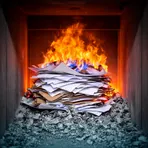
The criminal tried to obliterate the evidence of his wrongdoing by burning the documents.
-
In an attempt to hide the crime, he worked quickly to obliterate the evidence left behind.
Synonyms

 ∞
1.0
∞
1.0

Damage something so badly that it cannot be used or fixed
 502
3.4
502
3.4
Remove or kill something completely so it is gone
 308
3.6
308
3.6
To erase all data on a computer or phone so it cannot be recovered
 287
2.0
287
2.0
To remove information like text or files so it cannot be seen
 189
4.2
189
4.2
Destroy something so nothing is left
 156
2.2
156
2.2
Remove all traces of something from memory or history
 85
6.6
85
6.6
Remove something harmful completely, for example a disease or pest
 71
7.5
71
7.5
To destroy something completely so nothing remains
 60
6.9
60
6.9
To destroy something completely, often on purpose
 33
7.1
33
7.1
To burn things like documents or waste until they turn to ash
 21
8.8
21
8.8
To remove all signs of something like a record or memory so it cannot be found
 15
4.2
15
4.2
Completely destroy an idea, argument, or reputation
 15
7.6
15
7.6
To destroy something completely so nothing is left
 1
3.9
1
3.9
To destroy or carry something away completely, for example by water
 1
9.9
1
9.9
To destroy something completely, including its root
Antonyms


How Concealed
- NSFW

- Informal
12
6.0
- Informal
8
7.7
Surface Forms
Morphology
obliterate + the + evidence
The verb 'obliterate' means to destroy or erase completely and 'evidence' means proof, so their combination clearly yields 'completely destroy the proof'. This is a literal, compositional verb + object construction (with a definite article) that follows normal semantic composition and is therefore immediately understandable to learners who know the constituent words.
Etymology
Obliterate the evidence comes from the image of someone wiping away writing or marks until nothing is left. To obliterate once meant to make letters disappear and evidence are the marks that prove something, so the phrase means 'to completely destroy or erase proof of something'.