
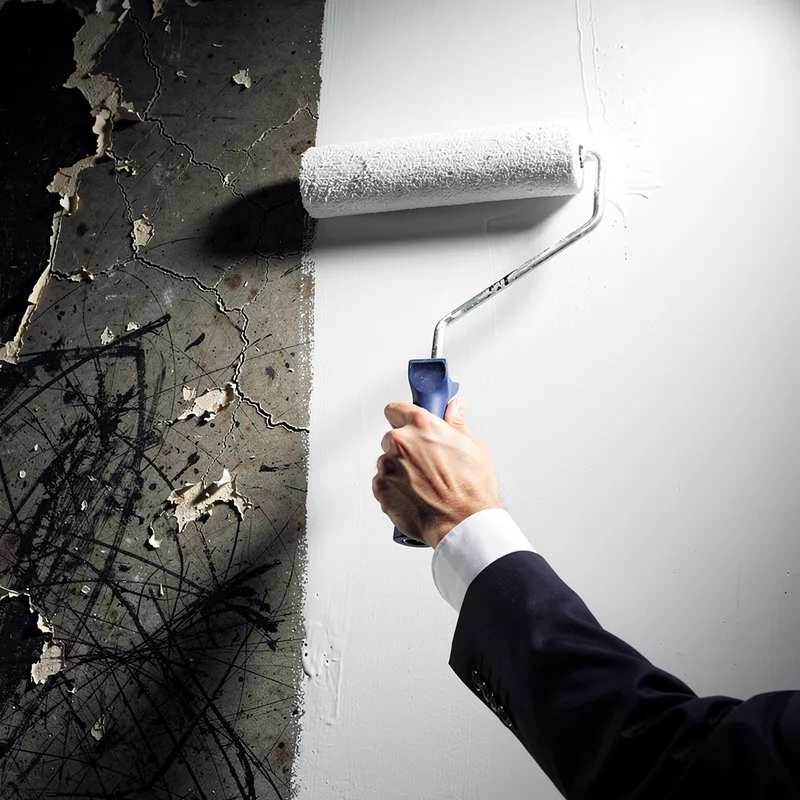
to whitewash
 12
6.0
12
6.0

- verb
- /ˈwaɪtˌwɔʃ/
- You're just trying to whitewash it.
Loading YouTube…
Watch on YouTubeSo there's no whitewashing in this book of how bad it gets.
- So there's no whitewashing in this book of how bad it gets.
- The data is showing and this should upset everybody to whitewash history.
- Brett Stevens was not sitting there whitewashing or even praising Donald Trump in any sense.
- But let's not whitewash it and, and come up with this, you know, Patty cake fest a month before Christmas.
- I and my advisors were convinced that they weren't just doing this to sort of whitewash their sins and provide a human riot shield for whatever they were going to do.
- This is a woman who has whitewashed herself, right, as well, right?
- The third issue we had was people are now whitewashing good cooler designs by partners because of this AMD blog post.
Examples
-
Many politicians try to whitewash their past mistakes during election campaigns.
-
You want me to whitewash what happened for profit?
-
And yet his reputation got completely whitewashed by a family that knows how to do it.
-
I regularly refuse to carry books that whitewash their characters and otherwise promote oppression of any variety.
Blog text (12) -
To call Rachel unfair or compare her to Palin is whitewashing the facts and the context.
Blog text (24) -
Ostensibly a self-policing body to discipline doctors, the panel usually served to whitewash medical incompetence.
Fiction book (1995) -
The notion that civilian deaths are permissible if unintended, the authors argue, has allowed militaries to whitewash the destructiveness of their operations.
Academic text (2011) -
The company attempted to whitewash its involvement in the scandal, claiming it was a mere misunderstanding.
-
The documentary was criticized for trying to whitewash the harsh realities of the conflict.
Synonyms
 314
3.7
314
3.7
To hide something so people cannot see or find out about it
 156
4.4
156
4.4
To do or say something to hide someone's bad action
 44
7.3
44
7.3
To make documents or facts not true to deceive people
 23
8.0
23
8.0
To make something sound better to hide problems
 22
6.5
22
6.5
Make a problem or mistake seem less serious by leaving out details
 19
5.0
19
5.0
Make something unpleasant seem nicer than it is
 11
7.5
11
7.5
To change numbers or facts dishonestly to hide the truth
 8
7.7
8
7.7
To hide a problem instead of dealing with it openly
 5
7.9
5
7.9
Try to hide problems instead of dealing with them
 3
5.9
3
5.9
To say something that is not exactly what happened to make it look better
 2
7.2
2
7.2
Stop people finding out about a mistake, crime, or embarrassing event

To hide problems or make them seem less serious

To try to hide a scandal by giving wrong information to the public

To keep secret wrong actions or mistakes from other people

Change facts on purpose to make something seem better

To make a reputation or image look better by hiding problems
Phrasal Verbs
How Deceptive
- Formal
44
7.3
 12
6.0
314
3.7
22
6.5
59
5.3
12
6.0
314
3.7
22
6.5
59
5.3
Surface Forms
Morphology
Etymology
To whitewash in the sense of hiding faults comes from the idea of painting over dirt with a coat of white so things look better. That's why to whitewash a scandal means to cover up problems and make them seem less bad.