
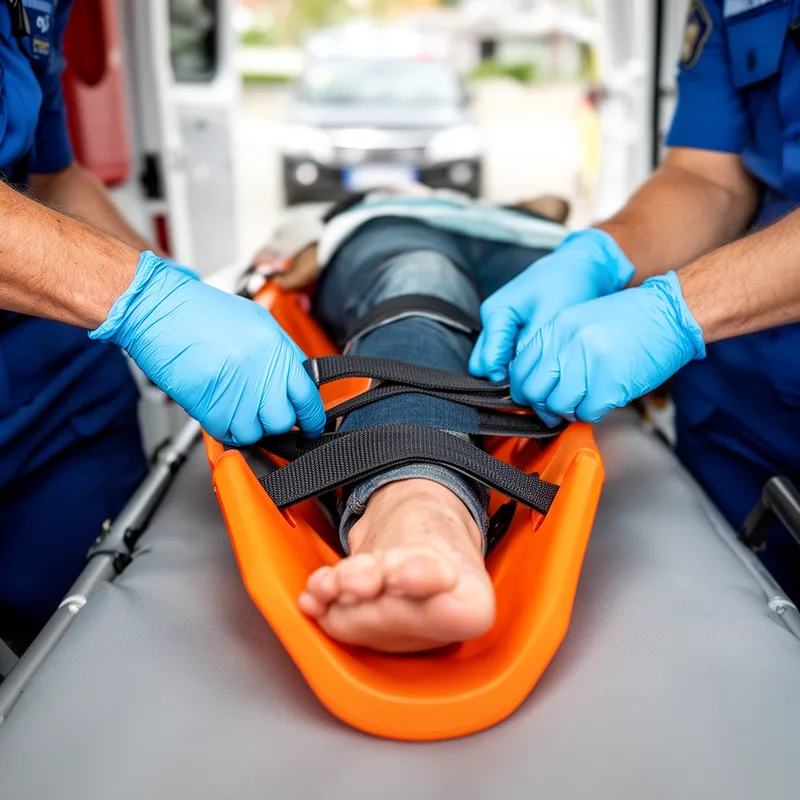
immobilizing
- noun
- /ɪˈmoʊbɪlaɪzɪŋ/
 :
inmovilización
:
inmovilización
- Effective immobilizing of the vehicle was crucial after the accident.
Examples
-
The immobilizing of the patient's arm was essential after the injury.
-
The patient's injury required immediate immobilizing to prevent further damage.
-
During surgery, immobilizing the area is essential for precision.
-
The immobilizing procedure is critical for recovery.
-
The immobilizing injury kept him from participating in the game.
-
The doctor used a splint for the immobilizing treatment of her broken arm.
-
After the earthquake, the immobilizing debris blocked all exit routes from the building.
Synonyms

 73
4.7
73
4.7

Something used to hold a person or animal still
 4
6.3
4
6.3
A state of no movement or not being able to move
 1
6.9
1
6.9
To stop a person or thing from moving
 1
7.3
1
7.3
Making someone unable to move or think clearly, often for a short time with medicine
The state of being unable to move part of the body because of injury or being held still

A state in which something does not move or change

Being impossible to move or change

Not being able to move, especially in living things

A state when action, services, or decisions stop because of a problem
Antonyms

How Immobilized

Surface Forms
Morphology
immobilizing = immobilize (transparent) = im + mobil + ize + ing
The gerund/participle is transparently formed from the verb 'immobilize' by adding -ing.
Etymology
Immobilizing comes from the parts in- meaning 'not' and mobile meaning 'able to move', the same root you see in mobile. So to immobilize something is to make it 'not able to move' or to stop its movement.