

paralysis
 81
5.4
81
5.4

- noun
- /pəˈræləsɪs/
- She was diagnosed with paralysis after a stroke affected her ability to move her arm.
- facial paralysis
- flaccid paralysis
- acute flaccid paralysis
Loading YouTube…
Watch on YouTubeThe loss of his sight, the paralysis of his hand.
- The loss of his sight, the paralysis of his hand.
- This is all with the the goal of of reversing paralysis in mind.
- I guess severe head pain, facial paralysis, that's got to be.
- But I don't want to have paralysis with something bad.
- Now this next one is called Sleep Paralysis by JRD Artistry.
- Obviously it's being used right now for paralysis and helping people with cognitive impairments.
- Hell yeah bro that is literally a paralysis demon.
Examples
-
After the accident, he experienced complete paralysis in his legs and could not walk.
-
The loss of his sight, the paralysis of his hand.
-
You said that you knew a doctor that fixed someone with paralysis.
-
The paralysis will likely be permanent.
-
Her dad suffered similar symptoms to Anna's, temporary paralysis and loss of speech.
-
There are no autonomic effects, just the paralysis of the lower extremities.
Fiction book (1999) -
Our patient had postoperative left vocal fold paralysis and associated aspiration with oral intake.
Academic text (2008) -
Most mice had a wobbling gait and slight paralysis in the back limbs.
Academic text (2013) -
The doctor explained that the paralysis was caused by nerve damage from the injury.
Synonyms
 30
8.4
30
8.4
A condition that makes part of the body weak or unable to move
 1
9.9
1
9.9
Weakness that makes a body part hard to move

Loss of movement and feeling in part or all of the body

Loss of the ability to move muscles on purpose
Antonyms


Compounds

- Specialized
1
6.9
Loss of muscle strength because damaged nerves cannot make muscles work, making muscles soft and limp

- Archaic

 1
6.5
1
6.5
A contagious disease caused by a virus that often makes children unable to move parts of their body

- Specialized
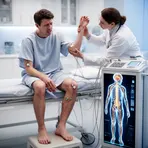
Loss of movement in one arm from nerve damage in the shoulder that often happens at birth
- Archaic
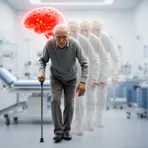
A rare nerve disease that causes pain, muscle weakness, and sometimes paralysis in the arms and legs
- Archaic
A brain disease that gets worse and causes tremors, stiffness, and slow movement

- Specialized
Weak muscles and stiffness with sudden muscle jerks caused by brain damage at birth

How Paralysed

Surface Forms
Morphology
paralysis = paralyse (semi-transparent) = paralyse + sis
Formed from the verb 'paralyse' by the Greek-derived noun ending '-sis'; meaning is directly related but the morphological pattern and Greek components are not fully obvious to B1 learners.
Etymology
Paralysis comes from old Greek parts para- meaning 'beside' and lysis meaning 'loosen', the same lysis you see in analysis. So it shows a part of the body is 'loosened' or let go and cannot move, which is why paralysis means loss of movement.