
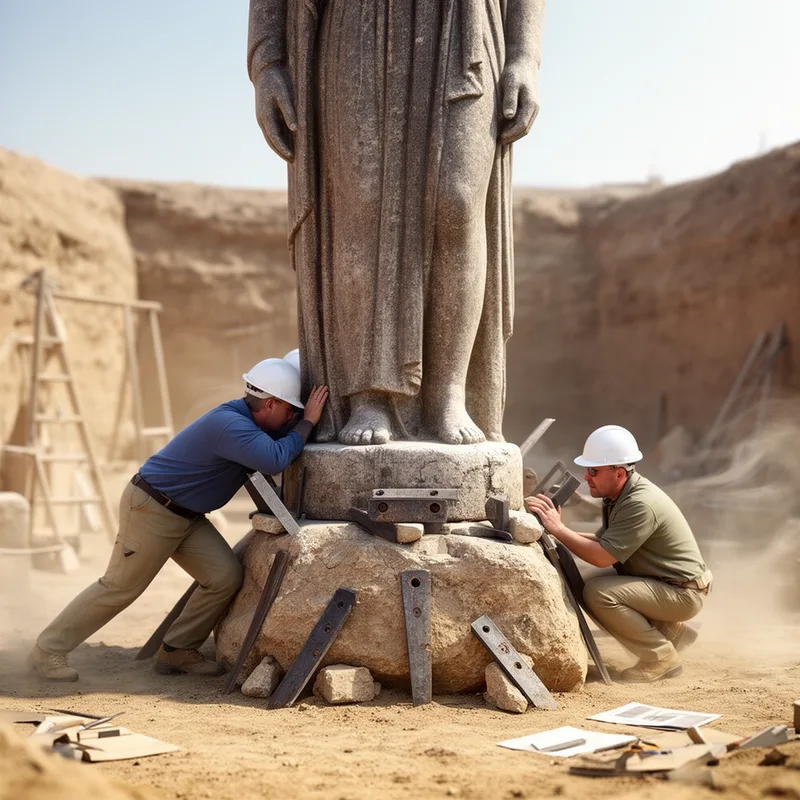
immovability
- noun
- /ˌɪməˈveɪbɪlɪti/
- The immovability of the old fortress gave it a sense of enduring strength against the test of time.
Examples
-
The dark, ancient immovability of the mountain calms him, and he thinks maybe he can sleep.
Fiction book (1991) -
Craig was in his mid-twenties, "sober and just huge," as Wallace would later write in "Infinite Jest," looking "less built than poured, the smooth immovability of an Easter Island statue."
Blog text (18) -
Celebration of the well-heeled, the wealthy, and the immovability of our status.
-
Our confidence in the immovability of our character may be complacent and premature.
Academic text (1998) -
Are we hopelessly resigned to the stubborn immovability of what we believe?
Blog text (9) -
It had been there a while already, by the pale, dried earth speckling its back and by the immovability of its defeated head.
Fiction book (1990) -
There is unity, singularity, and immovability in these texts—and consequently in these objects, even if there are many ways to relate to them.
Academic text (1999) -
Part of the problem is wariness with apocalyptic rhetoric, which simply fails to "get through" to the investors; another part is the seeming immovability of capitalist greed.
Academic text (2018) -
The immovability of the statue made it a popular spot for tourists to take pictures.
-
In the face of strong winds, the immovability of the ancient trees was truly impressive.
Synonyms

 4
6.3
4
6.3

A state of no movement or not being able to move
 1
7.5
1
7.5
A state of not moving or not reacting to change

Being impossible to move or change

The state of being unable to move part of the body because of injury or being held still

Not being able to move, especially in living things

A time when a person or thing is completely still

Being unable to move because of shock, fear, or not knowing what to do
Antonyms

How Movable

Surface Forms
Morphology
Etymology
The word immovability breaks into im- meaning 'not', move meaning 'to move', and -ability meaning 'a quality'. So, immovability is the quality of being 'not able to move', which is why we use it for things or people that cannot be moved or changed.