

immobilization
 1
6.9
1
6.9

- noun
- /ɪˌmoʊbɪlaɪˈzeɪʃən/
- Atrophy appears to be the result of immobilization, and the degree of atrophy is dependent on the location and function of the muscle.
- nitrogen immobilization
- microbial immobilization
- gross immobilization
Loading YouTube…
Watch on YouTubeSome people freeze and that immobilization was not seen as part of the system.
- Some people freeze and that immobilization was not seen as part of the system.
Examples
-
Pulmonary embolism probably occurs because of prolonged immobilization.
Academic text (1995) -
Further immobilization and activity limitations are clearly written on the physician order sheet.
Academic text (2002) -
Identify the consequences of immobilization and physical inactivity on the major systems of the human body.
Academic text (2002) -
The story was meant to drive home the importance of careful spinal immobilization in all head, neck, and spine mechanisms.
Blog text (3) -
Mechanical factors of treatment, such as immobilization or internal fixation, are important features to facilitate the healing process.
Academic text (2002) -
After surgery, the doctor recommended a period of immobilization to ensure proper healing of the joint.
-
Prolonged immobilization during a long flight can lead to discomfort and health risks like blood clots.
-
The patient's immobilization was necessary to prevent further injury to the fractured bone.
Synonyms
 73
4.7
73
4.7
Something used to hold a person or animal still
 4
6.3
4
6.3
A state of no movement or not being able to move
 1
7.3
1
7.3
Making someone unable to move or think clearly, often for a short time with medicine

An action that stops a person or thing from moving
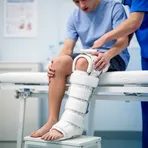
The state of being unable to move part of the body because of injury or being held still

A state when action, services, or decisions stop because of a problem

Not being able to move, especially in living things
Antonyms


How Immobilized

Surface Forms
Morphology
immobilization = immobilize (transparent) = im + mobile + ize + ation
Built by adding the nominalizing suffix '-ation' to the verb 'immobilize'; the sequence im- + mobile + -ize + -ation yields a clear 'act or process of making immobile' reading.
Etymology
Immobilization comes from the Latin parts in- 'not' and mobilis 'movable', like in the words mobile and move. So immobilization means stopping movement or making something unable to move.