
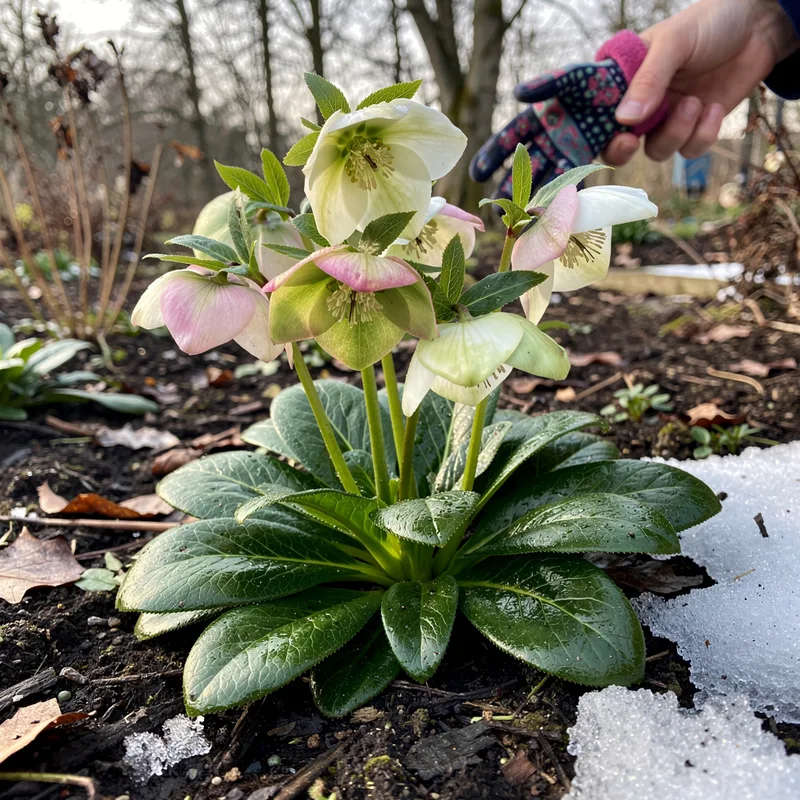
hellebore
 1
9.9
1
9.9

- noun
- /ˈhɛlɪˌbɔr/
- Specialized
- False hellebore
- hellebores in full bloom
- hellebore collection
- hellebores (Helleborus foetidus)
Examples
-
Bring me ten cc's of bat's blood, some demonswart, and a half gill of black hellebore." "We're all out of black hellebore," Frike said.
Fiction book (1991) -
She planted several varieties of hellebores in her flower bed, knowing they were known for their poisonous qualities.
-
And look at these hellebores blooming their heads off.
-
And they're upright, so not all hellebores face down, you guys.
-
Death camass. Hellebore.
Fiction book (1991) -
Bring me ten cc's of bat's blood, some demonswart, and a half gill of black hellebore." "We're all out of black hellebore," Frike said.
Fiction book (1991) -
HELLEBORE...HENBANE...
-
Corn lily, or false hellebore, which usually grows along rivulets in the meadow, gets its name from its large, strongly veined leaves that resemble green corn husks.
Academic text (1998) -
The garden was filled with beautiful hellebores that bloomed in early spring, showcasing their leathery leaves.
-
Many people admire the striking flowers of hellebores, but they must be careful due to the plant's toxicity.
Synonyms
A garden plant that likes shade and makes flowers in late winter and early spring
A group of plants called hellebores that live for many years and bloom in early spring
Compounds

- Specialized
An evergreen European plant with leathery leaves and white winter flowers whose parts are poisonous if eaten
- Specialized
A North American plant with large leaves and greenish flower clusters that is poisonous and used carefully in medicine

- Specialized
A wild plant like a lily that grows every year with large leaves and thick poisonous roots
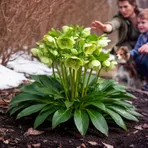
A plant from Europe with green cup-shaped flowers and large divided leaves that is poisonous

- Specialized
A plant that has green flowers, smells bad, and is poisonous if eaten

- Specialized
A North American plant with large leaves and yellow-green flowers that is poisonous
Surface Forms
Etymology
Hellebore comes from the old Greek name helleboros, and a helpful way to remember it is that this old name may be linked to a word meaning 'to injure' or 'to make ill', which fits because hellebores are poisonous, early-blooming plants.