

American hellebore
- noun
- /əˈmɛrɪkən ˈhɛlɪbɔr/
- Specialized
- The large leaves and racemes of greenish flowers make the American hellebore easy to identify in wet meadows.
Examples
-
Caution is needed when handling American hellebore, as all parts of the plant are poisonous.
-
Researchers studied the medicinal properties of American hellebore despite its high toxicity.
-
The American hellebore is often found in wetland areas.
-
Many herbalists use American hellebore for its medicinal properties.
-
Caution is needed when handling American hellebore, as all parts of the plant are poisonous.
-
Researchers studied the medicinal properties of American hellebore despite its high toxicity.
-
The large leaves and racemes of greenish flowers make the American hellebore easy to identify in wet meadows.
Synonyms

A North American plant with large green leaves and yellow-green flowers that contains poisonous chemicals used in some medicines

A North American plant with large leaves and yellow-green flowers that is poisonous
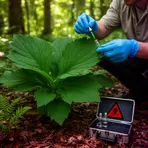
A North American plant with large leaves that has chemicals used in medicine but can be poisonous

A poisonous plant with large leaves and greenish yellow flower clusters that people use in traditional medicine

A wild plant like a lily that grows every year with large leaves and thick poisonous roots
Surface Forms
Morphology
The noun phrase is directly compositional: 'American' specifies the origin/location of the noun 'hellebore', so a learner who knows both words will understand it refers to a hellebore from America. While detailed botanical or medicinal information in the full definition is specialized, the basic referential meaning is transparently derived from the constituents.
Etymology
American hellebore gets its name from old plants called hellebore, which people long ago knew could make animals and people sick. That's why the name today points to a 'poisonous' plant that was also 'used in medicine'.

