

Indian poke
- noun
- /ˈɪndiən poʊk/
- US
- You can recognize Indian poke by its thick stem and clusters of greenish-yellow flowers in the summer.
Examples
-
The roots of Indian poke were once used in traditional remedies by indigenous peoples.
-
Despite its poisonous properties, Indian poke has a long history in herbal medicine.
-
The Indian poke plant can be found in many forests.
-
Many herbalists use Indian poke for its medicinal properties.
-
In traditional herbal medicine, Indian poke is recognized for producing a toxic alkaloid that can be beneficial in small doses.
-
Many indigenous tribes historically utilized Indian poke to treat various ailments due to its medicinal properties.
-
The large leaves and distinctive yellowish-green flowers of Indian poke make it easily identifiable in North American landscapes.
Synonyms

A North American plant with large green leaves and yellow-green flowers that contains poisonous chemicals used in some medicines
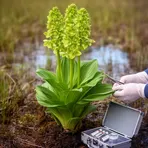
A North American plant with large leaves and greenish flower clusters that is poisonous and used carefully in medicine

A North American plant with large leaves and yellow-green flowers that is poisonous
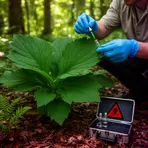
A North American plant with large leaves that has chemicals used in medicine but can be poisonous
Surface Forms
Morphology
The noun phrase is compositionally built: 'Indian' simply locates or identifies the variety of 'poke' (the plant), so a learner knowing both words can infer it refers to a poke plant associated with India or the Indian region. This adjectival + noun combination is a transparent, cross-linguistically common naming pattern and should be predictable to a B1 learner.
Etymology
Indian poke may come from early settlers who saw Native American healers use a strong wild plant; they used the local name poke and added Indian to show who used it. That's why the name refers to a plant known for being both 'poisonous' and used in traditional 'medicine'.

