

Indian poke
- noun
- Indian
- The Indian poke thrives in moist, shady woodlands.
Examples
-
Gardeners should be cautious, as Indian poke berries can be toxic if ingested.
-
Researchers are studying the medicinal properties of Indian poke roots.
-
The Indian poke thrives in moist, shaded areas.
-
Many gardeners appreciate the Indian poke for its vibrant foliage.
-
Gardeners should be cautious, as Indian poke berries can be toxic if ingested.
-
Researchers are studying the medicinal properties of Indian poke roots.
-
The Indian poke thrives in moist, shady woodlands.
Synonyms
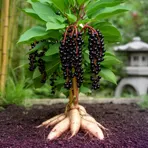
A plant with thick roots and clusters of dark berries from eastern Asia
Surface Forms
Morphology
The noun phrase is compositionally built: 'Indian' simply locates or identifies the variety of 'poke' (the plant), so a learner knowing both words can infer it refers to a poke plant associated with India or the Indian region. This adjectival + noun combination is a transparent, cross-linguistically common naming pattern and should be predictable to a B1 learner.
Etymology
Indian poke may also have been used for poke-like plants from Asia when early writers called plants from that region 'Indian'; they kept the word poke for the plant and added Indian to show its origin. That's why the name often points to a pokeweed that grows in 'India' or nearby regions and can be 'toxic'.

