
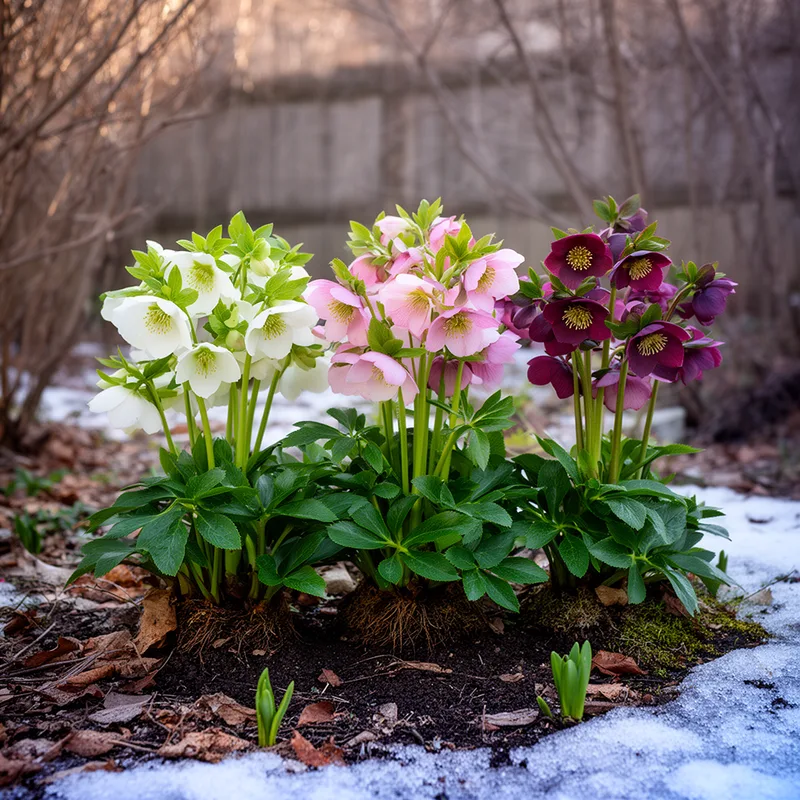
genus Helleborus
- noun
- /ˈdʒɛnəs hɛlˈɛbərəs/
- Specialized
- Members of the genus Helleborus are prized for their resilience in shaded parts of the garden.
Examples
-
Many gardens feature genus Helleborus for their early spring blooms and attractive foliage.
-
Hellebores belong to the genus Helleborus.
-
Botanists classify hellebores under the genus Helleborus, part of the Ranunculaceae family.
-
The genus Helleborus includes many beautiful flowering plants.
-
Botanists classify hellebores under the genus Helleborus, part of the Ranunculaceae family.
-
Many gardens feature genus Helleborus for their early spring blooms and attractive foliage.
-
Hellebores belong to the genus Helleborus, known for thriving in shaded areas.
Synonyms
A garden plant that makes attractive flowers in late winter and early spring
Surface Forms
Morphology
The phrase 'genus Helleborus' is a transparent taxonomic noun phrase: 'genus' (a biological rank) plus the proper name 'Helleborus' denotes that group of related species. This follows standard scientific naming patterns found across languages, so a B1 learner who knows both constituents can readily derive the meaning.
Etymology
Genus Helleborus may come from old Greek parts helle- and -boros, which mean 'to injure' and 'food', because the plant is poisonous and was once used as a strong medicine. So the name stuck to these early-flowering plants and is still used by plant experts today.

