
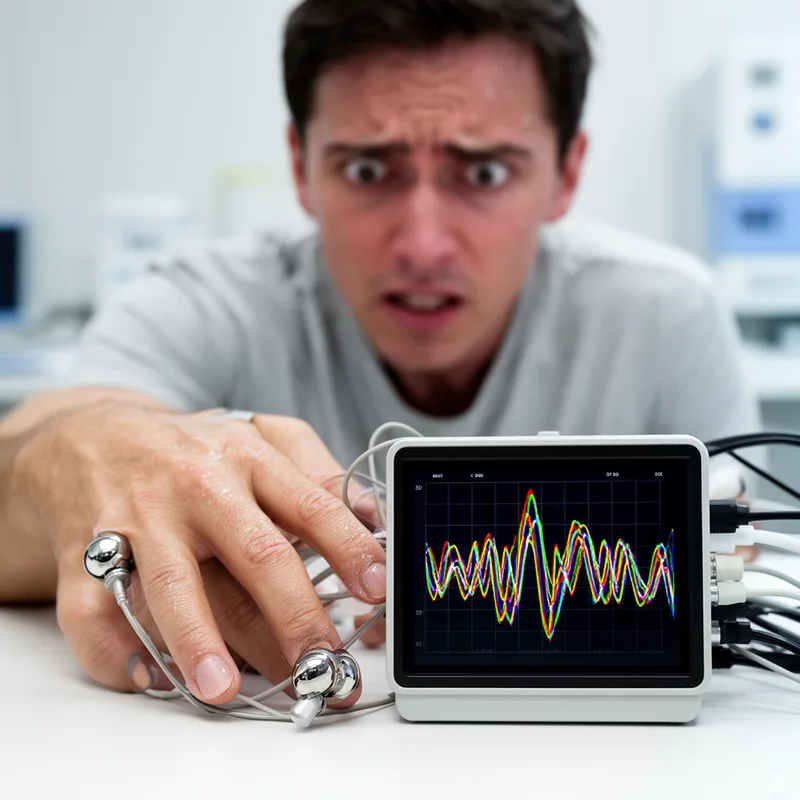
electrodermal response
- noun
- /ɪˌlɛktrəˈdɜrməl rɪˈspɒns/
- Specialized
- The psychologist explained that the electrodermal response could indicate levels of arousal during the experiment.
Examples
-
The present findings are consistent with the reports of others in which electrodermal responses were readily demonstrated in response to exteroceptive feedback of EDFs and the instruction to "think" emotional thoughts as compared to relaxing thoughts.
Academic text (1992) -
By measuring the electrodermal response, the scientists were able to observe how the participants reacted to emotional stimuli.
-
At the same time, this sensitivity gives the electrodermal response an advantage when it comes to the direct study of cognitive variables (p. 200).
Academic text (1992) -
... the electrodermal response is so sensitive to shifts of attention and the momentary changes in arousal that accompany changes in cognition that it is impossible to eliminate cognitive factors completely from conditioning observational situations.
Academic text (1992) -
The researchers recorded the subject's electrodermal response to stress during the anxiety-inducing task.
Synonyms

 7
8.7
7
8.7

A change in the skin's small electric signals that show stress or anxiety
 1
6.2
1
6.2
Change in the skin's tiny electrical activity when you feel stress or strong emotion

A small change in the skin's electric signals when someone feels stress or strong emotion

A change in the skin's electrical signal when someone feels stress or strong emotion

A change in the skin's electric signals when a person feels stress or anxiety

A change in small electrical signals in the skin when a person feels stress or anxiety
Surface Forms
Morphology
electrodermal + response
The term is compositionally built from electro- (relating to electricity) + dermal (relating to skin) + response (reaction), so its meaning — an electrical reaction of the skin — can be directly inferred from the parts. Although the compound is technical and may be unfamiliar as a whole, its semantics follow regular morphological composition, making it understandable to learners who know the constituent morphemes.
Etymology
Electrodermal response comes from the parts electro, meaning 'electric', and dermal, meaning 'skin'. It is the small electric change on the skin when someone feels 'stress' or 'excitement', so doctors and scientists measure it to see emotional reactions.