
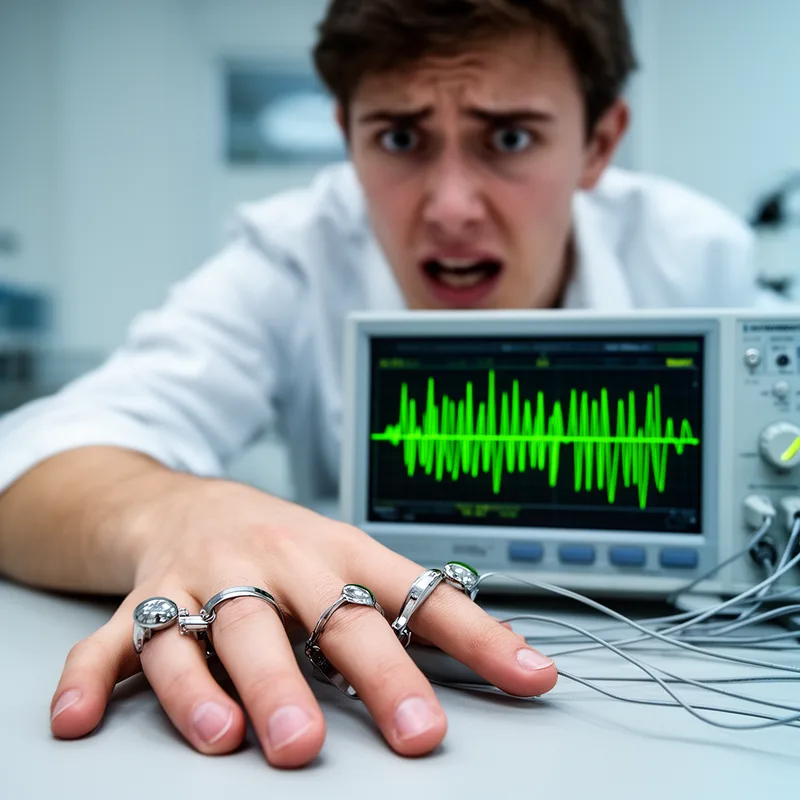
galvanic skin response
 1
6.2
1
6.2

- noun
- /ɡælˈvænɪk skɪn rɪˈspɒns/
- Specialized
- Researchers found that a person's galvanic skin response can indicate levels of anxiety during public speaking.
- measure your galvanic skin response
- galvanic skin response and heart rate
Loading YouTube…
Watch on YouTubeSo he hooks up his polygraph with like a GSR or the galvanic skin response thing that measures moisture, right?
- So he hooks up his polygraph with like a GSR or the galvanic skin response thing that measures moisture, right?
Examples
-
The study measured each participant's galvanic skin response to stressful images to analyze their emotional reactions.
-
In experiments, the galvanic skin response was used to assess the emotional reactions of individuals when hearing various sounds.
-
Your galvanic skin response suggests a problem.
-
No anxiety, no fluctuation in the galvanic skin response.
Fiction book (1995) -
First, there are several other psychiatric conditions in which patients fail to show galvanic skin responses, and not all of them lead to Capgras-like symptoms.
Academic text (2009) -
From her galvanic skin response, her pupils, and the gradual slowing of her heart, the AI saw that it had satisfied her.
Fiction book (2000) -
All subjects are connected to skin electrodes to measure their galvanic skin response (GSR).
Academic text (1999) -
So he hooks up his polygraph with like a GSR or the galvanic skin response thing that measures moisture, right?
-
It appeared that patients reacted with a Galvanic Skin Response (GSR) — of lie-detector fame — to photographs of faces of familiar persons.
Academic text (2009)
Synonyms
 7
8.7
7
8.7
A change in the skin's small electric signals that show stress or anxiety

A change in the skin's electrical activity when a person feels stress or strong emotion

A small change in the skin's electric signals when someone feels stress or strong emotion

A change in the skin's electrical signal when someone feels stress or strong emotion

A change in the skin's electric signals when a person feels stress or anxiety

A change in small electrical signals in the skin when a person feels stress or anxiety
Surface Forms
Morphology
The phrase is directly compositional: 'galvanic' (electrical), 'skin' (the body's covering) and 'response' (a reaction) combine to mean an electrical reaction of the skin. This follows a standard modifier+noun pattern, so a learner who knows the constituent meanings can infer the MWE's meaning even if the term is technical.
Etymology
Galvanic skin response is named after the scientist Luigi Galvani, who found electric reactions in frog legs, so galvanic means 'electric'. When you feel strong emotions, the tiny electric signals in your skin change as a response, so the phrase means 'a change in the skin's electricity when you are stressed or excited'.