

to displace
 140
5.5
140
5.5

- verb
- /dɪsˈpleɪs/
- The introduction of robots in the factory may displace some human workers.
- internally displaced
- displaced people
- displaced persons
Loading YouTube…
Watch on YouTubeChina's rightful place was on top, displacing America as the superpower.
- China's rightful place was on top, displacing America as the superpower.
- It's what the technology is displacing, namely sleep, right?
- How did you start making these connections and finding these displaced young people?
- They're often permanently unemployed or displaced into other like service sectors.
- And, and of course, what really happens is they're not displaced, they just change.
- The question is, can the pilot from Andar displace it as the champion here?
- It might be that unprocessed foods are being displaced out of your diet.
- It means it means displaced people coming here and higher energy costs.
- Yeah, because it's so big, it displaces all that air.
- Life balance is when this amount of work is displacing all of the things that are important to me.
- And you know how that is the the further displaced you get from the war.
Examples
-
During the military conflicts, millions of Kurds were displaced and fled to Turkey, Iran, and Iraq.
Academic text (2011) -
When people built stations, they tended to displace the birds and seals that used those locations.
Academic text (1990) -
Yes, so I know that these right here will displace a little bit of water.
-
AI will displace social drinking within five years.
-
Yeah, because it's so big, it displaces all that air.
-
Urban renewal led to the building of highways through the district, displacing Black families.
-
A "me-first" attitude and the desire to get rich quickly have displaced traditional and democratic values.
Academic text (1999) -
According to Human Rights Watch, Colombia has the fourth-largest internally displaced population in the world.
Academic text (1999) -
The hurricane will displace many residents from their homes in the affected area.
-
The floodwaters displaced families from their houses, forcing them to seek shelter elsewhere.
Synonyms
 ∞
1.0
∞
1.0
Change position or place
 ∞
1.5
∞
1.5
To move something or someone away from a place
 ∞
2.8
∞
2.8
To officially make someone leave their job
 948
1.9
948
1.9
To remove something from a place or container
 305
1.8
305
1.8
Put something back where it belongs
 129
3.4
129
3.4
Move out of the way or leave a job so someone else can take it
 90
5.5
90
5.5
To make someone stop working for a company
 70
3.3
70
3.3
To remove someone from their job
 52
4.5
52
4.5
Leave a place or job so it is free for someone else
 46
4.4
46
4.4
To make someone leave a job by pressure or threats
 43
3.0
43
3.0
Make someone leave a job or group because of a problem
 38
4.4
38
4.4
To pull a plant out of the ground or force people to leave home
 37
3.5
37
3.5
To make someone leave their job
 36
2.8
36
2.8
To make someone or something leave a place
 33
7.7
33
7.7
To fire someone from their job in informal speech
 31
7.4
31
7.4
To remove a leader from office, often by force
 23
7.5
23
7.5
To take the place of a person or thing because the new one is better
 23
3.9
23
3.9
To move something to another place
 19
6.2
19
6.2
Remove someone from a position of power, often in politics
 15
6.1
15
6.1
To force something or someone out of a place where they are stuck
 5
6.7
5
6.7
To remove a king or queen from power and their position
 4
5.7
4
5.7
To move something from its normal place and make it stop working or fitting
 2
4.1
2
4.1
Formally tell an employee that their job will end
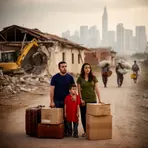
Make people leave their home and feel lost

To suddenly end someone's job or a relationship, often without warning

To tell someone they must leave their job
Antonyms


How Removed
80
6.2
 23
7.5
∞
1.5
140
5.5
∞
1.0
683
2.0
23
7.5
∞
1.5
140
5.5
∞
1.0
683
2.0
Surface Forms
Morphology
Etymology
Displace is made of dis- ('away') and place ('position' or 'spot'), so it literally means to move something 'away from its place'. That's why to displace someone is to make them leave their usual place or role.