

to supplant
 23
7.5
23
7.5

- verb
- /səˈplænt/
- "Machines are meant to aid the human mind, not supplant it."
- largely supplanted
- supplanted old
- supplanted the traditional
Loading YouTube…
Watch on YouTubeThis mission has supplanted or replaced what used to be provided by the church.
- This mission has supplanted or replaced what used to be provided by the church.
- It has become a career track and it is supplanting other career tracks that used to be soft power influence jobs.
- So you're not saving all that much if you wanna use renewables to supplement the existing grid, but they cannot supplant it.
- If we don't, then other people will try to supplant the people that are in the process now because the innovation is right on our doorstep more than ever.
- I think in this day and age, we've kind of supplanted that consideration because my feelings count.
- Very useful schema which will eventually be supplanted largely within the West by Gregory the Greats.
- It is the April B, yes, the protein on the LDL particle supplanted LDL as a as a proxy for cardiovascular risks, right?
Examples
-
The new technology aims to supplant outdated methods of data storage and retrieval.
-
Years ago, rotary drilling largely supplanted cable drilling by allowing a lower CD.
Academic text (1991) -
There are other ways to do it, and blogging might supplant the printed newspaper.
-
In short, science and reason have supplanted superstition, and we are all the better for it.
-
Importantly, CAC is not intended to supplant other teaching strategies, and it may not be applicable in all situations.
Academic text (2013) -
Additionally, electronic books, video streaming, and databases are supplanting many of the physical resources in the school library.
Academic text (2013) -
The increased understanding of the disease-causing role of "germs" has largely supplanted superstitious explanations for illness.
Academic text (1999) -
The introduction of renewable energy sources is set to supplant traditional fossil fuels in the coming decades.
-
As digital streaming services rise in popularity, they are beginning to supplant traditional cable television.
Synonyms
 ∞
1.8
∞
1.8
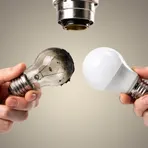
Put another thing or person in place of one that is broken
 140
5.5
140
5.5
To make a person leave their usual place or job
 15
7.2
15
7.2
To take the place of something older that people used before

To take the place of something or someone
Antonyms

How Forceful

Surface Forms
Etymology
Supplant comes from Latin parts sub- 'under' and plantare 'to place the foot', so imagine putting your foot under someone to trip them. That's why to supplant someone is to take their place, often by force or by replacing them.