

to move out
 36
2.8
36
2.8

- phrasal verb
- /muːv aʊt/
- We need to move out early.
Examples
-
We've been trying to get our sons to move out on their own.
-
We'll be moving out tomorrow.
-
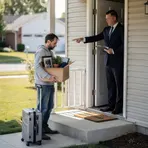
I first felt successful when I moved out of my parents house.
-
Yes, but when I was moving out, it was the same price.
-
And I moved out to LA and and started acting school there.
-
If you really care about your Japanese friends, encourage them to move out of their country.
Blog text (12) -
Try to work with them and get them to agree to move out in a reasonable time frame.
Blog text (9) -
First Battalion will move out at 05:30.
-
Dennis was five, and we stayed here in Columbus while Gene moved out to Dayton and married again after a while.
Fiction book (1998) -
The landlord told us we had to move out by the end of the month.
Synonyms
 948
1.9
948
1.9
To remove something from a place or container
 683
2.0
683
2.0
Move someone or something from one place to another
 528
2.7
528
2.7
To move a person or thing to another place
 344
4.1
344
4.1
To move people out of a place because it is dangerous, for example during a fire
 194
5.0
194
5.0
Force someone to leave a place, such as a school or country, often by official order
 147
3.7
147
3.7
Move to a new place and start living or working there
 140
5.5
140
5.5
To make a person leave their usual place or job
 77
4.6
77
4.6
To make someone leave a house or land by court order
 74
4.1
74
4.1
Move a person to a different job or place of work within a company
 71
3.4
71
3.4
To force a person, animal, or feeling to go away
 70
3.8
70
3.8
Force someone or something to leave a place
 43
3.0
43
3.0
Make someone leave a job or group because of a problem
 32
4.2
32
4.2
Force someone to leave a place
 31
6.2
31
6.2
Force someone to leave a group or place because others reject them
 15
6.1
15
6.1
To force something or someone out of a place where they are stuck
 15
4.3
15
4.3
Move to a new place to live when something forces you to leave your home
 15
5.8
15
5.8
Force someone to leave a job or organization suddenly
 8
6.5
8
6.5
To make someone leave quickly to show they are not wanted
 4
7.9
4
7.9
Make someone leave quickly and forcefully
 1
4.0
1
4.0
To force someone to leave a place, group or job
 1
7.1
1
7.1
To force someone or something out of a place by searching
 1
8.2
1
8.2
Force someone to leave a place or job
Antonyms

How Forceful
46
4.4
 194
5.0
77
4.6
36
2.8
194
5.0
77
4.6
36
2.8
- Informal
5
6.4
Surface Forms
Morphology
The meaning 'to leave one's home/residence' is directly and transparently derived from 'move' (change place/residence) + 'out' (away from the interior). This motion verb + particle composition follows a common, cross-linguistic pattern and would be predictable to a B1 learner who knows both constituent meanings.
Etymology
The phrasal verb move out comes from the image of a leader giving an order and people or things leaving a place—imagine a teacher or officer saying 'move out' and everyone walking out the door. That's why it means 'to cause someone or something to leave a place'.