

dipole molecule
- noun
- /ˈdaɪpoʊl ˈmɒlɪkjuːl/
- Specialized
- Water is a classic example of a dipole molecule because it has a permanent separation of electric charge.
Examples
-
Water is a classic example of a dipole molecule because it has a significant separation of charge.
-
A dipole molecule has both a positive and a negative end.
-
Ammonia acts as a dipole molecule due to the electronegativity difference between nitrogen and hydrogen.
-
The behavior of a dipole molecule in an electric field is different from that of a nonpolar molecule.
-
Water is a common dipole molecule.
-
Ammonia acts as a dipole molecule due to the difference in electronegativity between nitrogen and hydrogen.
-
The behavior of a dipole molecule in an electric field illustrates how its positive and negative ends interact with charges.
Synonyms

 1
8.2
1
8.2

Two opposite electric charges or magnetic poles close together

Two equal but opposite electric charges that are close together
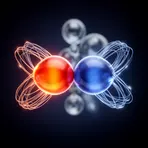
A pair of equal electric charges, one positive and one negative, close together like a water molecule
How Polar

Surface Forms
Morphology
The meaning 'a molecule with separated opposite charges' is directly and compositionally derived from 'dipole' (two opposite charges/poles separated) combined with 'molecule' (a bonded atomic unit). This is a literal scientific noun–noun compound following regular compositional patterns, so a learner who knows both constituents can infer the MWE meaning.
Etymology
Dipole molecule describes a tiny molecule with two opposite ends, like a small bar magnet: one end is 'positive' and the other is 'negative'. That's why it turns or moves in an electric field and behaves differently from molecules without opposite ends.