

dermatosclerosis
- noun
- /ˌdɜrməˌtoʊskləˈroʊsɪs/
- Specialized
- The patient was diagnosed with dermatosclerosis after presenting with thickened, tight skin on her hands.
Examples
-
Researchers are studying new treatments for dermatosclerosis to slow the progression of skin hardening.
-
Early detection of dermatosclerosis can improve long-term management of the disease.
-
The patient was diagnosed with dermatosclerosis last year.
-
Many people with dermatosclerosis experience skin changes.
-
The patient was diagnosed with dermatosclerosis after presenting with thickened, tight skin on her hands.
-
Early detection of dermatosclerosis can improve long-term management of the disease.
-
Researchers are studying new treatments for dermatosclerosis to slow the progression of skin hardening.
Synonyms
 27
8.3
27
8.3

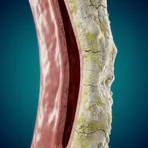
A change in body tissue that makes it harder or less flexible
 20
7.0
20
7.0
Extra scar-like tissue that grows in an organ like the lungs and liver after injury or ongoing inflammation
 9
4.1
9
4.1
A disease in which the immune system attacks the body's own tissues
 5
3.3
5
3.3
A problem that affects the skin, causing redness or itching
 4
4.2
4
4.2
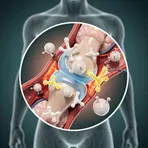
A disease in which the immune system attacks the body's healthy parts
 3
9.9
3
9.9
A long-term disease that makes the skin and sometimes organs become hard and thick
 1
3.6
1
3.6
A health problem that makes the skin red, sore, or itchy

 1
8.8
1
8.8
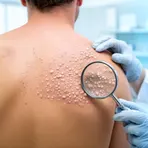
A skin disease that causes spots or bumps that are usually not red

A condition that makes the skin red, sore, or itchy
Surface Forms
Morphology
Etymology
The word dermatosclerosis is made of Greek parts: dermato- meaning 'skin', the same root in dermatology, and -sclerosis meaning 'hardening'. So, dermatosclerosis literally means 'hardening of the skin' and refers to a condition where the skin becomes thick and hard.