

skin disease
 5
3.3
5
3.3

- noun
- /skɪn dɪˈziːz/
- The doctor explained that the skin disease required ongoing treatment to manage its symptoms.
- occupational skin disease
Loading YouTube…
Watch on YouTubeLike maybe this guy's got like, I don't know, some like skin disease or skin condition where he has to have an umbrella to shield him from the sun.
- Like maybe this guy's got like, I don't know, some like skin disease or skin condition where he has to have an umbrella to shield him from the sun.
Examples
-
Psoriasis is a common, chronic, relapsing, distressing skin disease of unknown aetiology.
Academic text (2007) -
The shy man with the skin disease sat beside me.
Fiction book (1997) -
She was born with a skin disease.
-
But on the Atlantic Coast, I got a fungus, a skin disease, that covered my whole arm.
Academic text (1991) -
Morgellons disease is a chronic skin disease known to be associated with Lyme disease.
Blog text (8) -
And studies show that people who suffer with inflammatory skin diseases like eczema are more susceptible to mental health issues.
-
Itching is the predominant symptom of skin disease, but it is ill-understood and a challenge for future research.
Academic text (1999) -
In Nigeria, malnutrition is a predispositional factor and influences the prevalence of skin diseases (Tinea capitis).
Academic text (2007) -
Many people with a skin disease experience discomfort and social stigma due to their condition.
-
She joined a support group for individuals affected by a skin disease to share experiences and advice.
Synonyms
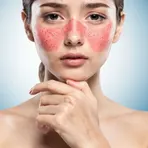 35
7.8
35
7.8
A long-lasting disease where the body's defense system attacks its own parts, often causing skin rashes and joint pain
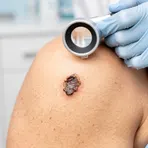 30
2.5
30
2.5
A growth of skin cells that can be harmful, often after too much sun
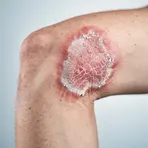 12
6.3
12
6.3
A long-term skin disease that causes red, scaly patches, often on the scalp, elbows, knees and lower back
 5
5.0
5
5.0
Skin that becomes red, itchy and sometimes has blisters or a rash
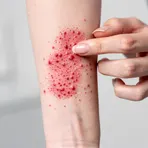 4
3.0
4
3.0
A red, itchy area on the skin that may have spots or bumps
 1
3.6
1
3.6
A health problem that makes the skin red, sore, or itchy
 1
5.1
1
5.1
Red, itchy skin caused by touching something that hurts the skin
 1
9.9
1
9.9
A rough, thick patch on the skin where the outer layer grows too much

 1
8.8
1
8.8
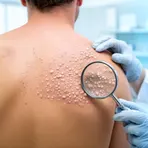
A skin disease that causes spots or bumps that are usually not red
 1
4.6
1
4.6
A long-lasting skin condition that makes skin red, very itchy, and often connected to allergies
 1
8.8
1
8.8
A long-lasting skin problem that causes scaly, greasy patches on the scalp or face
 1
9.8
1
9.8
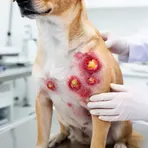
A skin infection caused by bacteria that makes pus-filled sores, often in dogs
 1
9.6
1
9.6
A skin infection caused by a fungus that often affects warm, moist skin under clothes
 1
7.3
1
7.3
A skin disease that causes open sores
 1
9.9
1
9.9
A rare disease that makes muscles weak and causes a red skin rash
 1
9.9
1
9.9
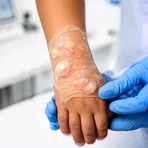
A condition in which the outer layer of the skin becomes loose and forms blisters
 1
9.9
1
9.9
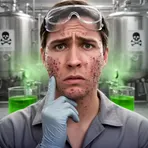
A skin disease that causes severe acne-like spots after contact with chemicals that contain chlorine
 1
9.6
1
9.6
A long-lasting skin problem that causes strong itching and thick patches
 1
4.6
1
4.6
A growth on the skin that may be harmless or cancerous

A condition that makes the skin red, sore, or itchy
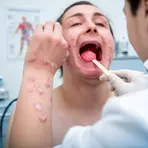
A rare disease in which the immune system makes blisters on the skin and inside the mouth
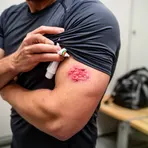
A skin infection caused by a fungus, often in warm, wet areas under clothing

A severe disease that causes many skin sores and can affect nerves and other body parts
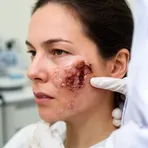
A long-lasting skin infection from tuberculosis that causes deep slow-healing sores on the face
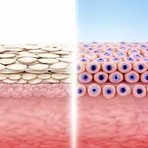
A skin condition in which the outer skin cells keep their nuclei instead of losing them

A problem of the top layer of skin that changes how it looks or feels
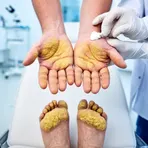
A skin condition that makes the palms and soles thick and hard
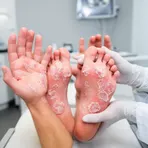
A skin disease that causes scaly rashes on the palms and soles
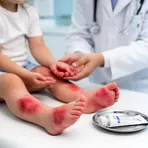
A condition in which the skin on the hands, feet, or other outer body parts becomes red and sore

A condition in which light scratching makes raised red lines on the skin

A long-term condition in which the immune system makes the skin hard and thick

A rare inherited skin condition causing dark crusted patches that can have pus
How Severe
- Specialized
30
2.5
 5
3.3
5
3.3
- Specialized
594
3.1
128
2.7
3
3.0
Surface Forms
Morphology
The meaning 'a disease that affects the skin' is directly and transparently derived from combining 'skin' (the external organ) with 'disease' (a pathological condition); the noun–noun specification is a common compositional pattern in English. This construction is cross-linguistically common (e.g., Spanish 'enfermedad de la piel'), so a B1 learner who knows both constituents will readily infer the MWE's meaning.
Etymology
Skin disease comes from the simple idea of naming an illness by the body part it affects. Skin means the outer part of the body and disease means an illness, so it means 'a disease that affects the skin'.