
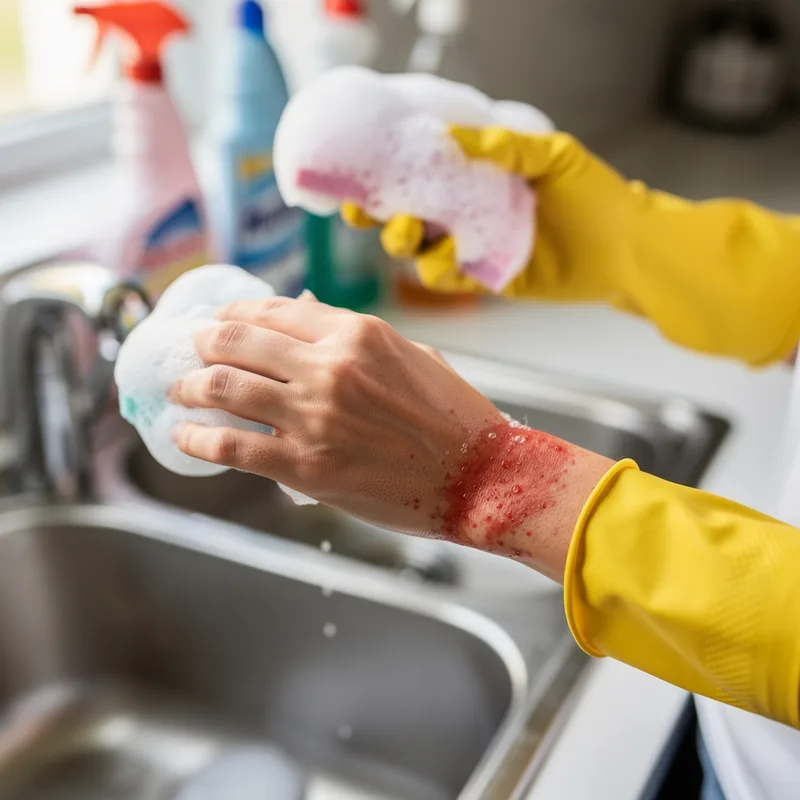
contact dermatitis
 1
5.1
1
5.1

- noun
- /ˈkɒntækt dɪrˈmætɪtɪs/
- Specialized
- The logical assumption was that the employee had a simple case of occupational allergic contact dermatitis due to workplace exposure to the nickel in the plated components.
- allergic contact dermatitis
- irritant contact dermatitis
- occupational contact dermatitis
Examples
-
Many people develop contact dermatitis after using harsh cleaning products on their skin.
-
PPD is the most common allergen associated with allergic contact dermatitis to permanent hair dye.
Academic text (2007) -
So, it is reasonable to conclude that they may have some allergic contact dermatitis due to skin contact with the cement.
Academic text (2014) -
It has been well established that stress can cause or contribute to what appears to be contact dermatitis.
Academic text (2014) -
Allergic contact dermatitis due to nickel-plated components.
Academic text (2014) -
Nickel is our most common sensitizer, causing many cases of allergic contact dermatitis.
Academic text (2014) -
For example, a change in diet that increases nickel uptake could also result in allergic contact dermatitis.
Academic text (2014) -
However, cement is also a potent skin irritant, so almost certainly there will be some irritant contact dermatitis forming part of the skin condition.
Academic text (2014) -
A test on all the components that this employee would have handled at work revealed that none were releasing nickel, thus excluding the occupational allergic contact dermatitis due to nickel exposure.
Academic text (2014) -
If contact dermatitis is diagnosed, alternative latex or non-latex gloves can often be purchased to exclude the specific substance causing the problem.
Academic text (1998)
Synonyms
 5
5.0
5
5.0
Skin that becomes red, itchy and sometimes has blisters or a rash
 5
3.3
5
3.3
A problem that affects the skin, causing redness or itching
 3
3.0
3
3.0
Red, itchy or sore skin after touching something that causes a reaction
Antonyms
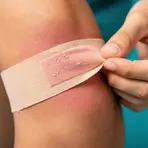
How Severe
5
3.3

- Specialized
5
5.0
- Specialized
1
5.1
- US

 1
6.1
4
3.0
3
3.0
1
6.1
4
3.0
3
3.0
Surface Forms
Morphology
The meaning is directly compositional: 'contact' (physical touch) + 'dermatitis' (skin inflammation) yields inflammation of the skin caused by contact, so a B1 learner who knows both constituents can infer the sense. This follows regular medical compound patterns and is cross-linguistically transparent and predictable.
Etymology
Contact dermatitis comes from the word contact meaning touch and dermatitis meaning skin irritation, painting the literal picture of the skin where something has touched you. So it means 'a red, itchy skin reaction that appears where something has touched you'.