
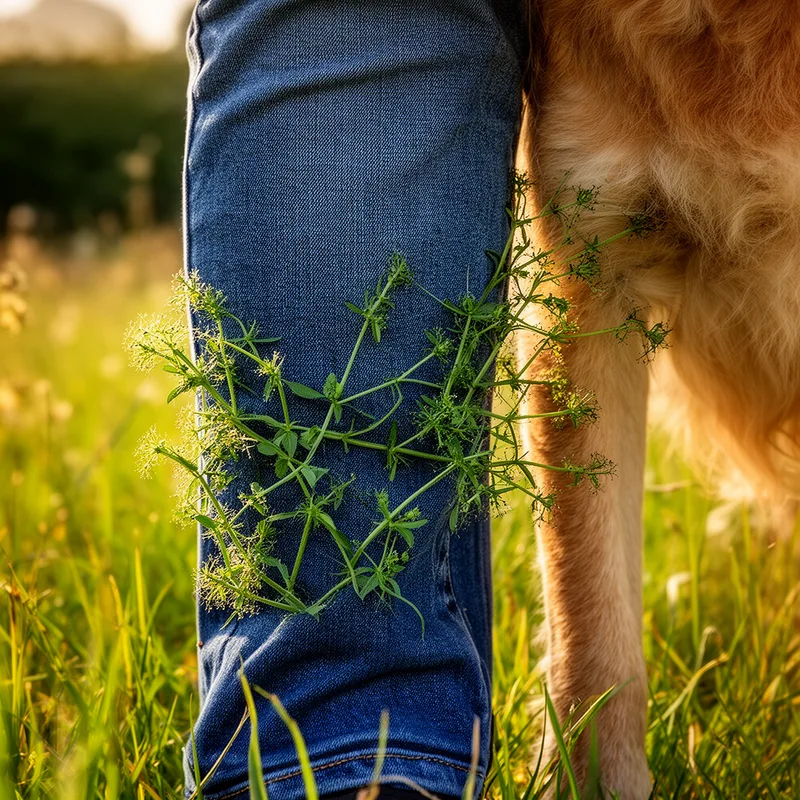
catchweed
- noun
- Catchweed grows abundantly in the wild, covering the ground with its prickly stems.
Examples
-
The catchweed clung to her clothes as she walked through the meadow.
-
Gardeners often remove catchweed to prevent it from overtaking their flower beds.
-
Catchweed thrives in hedgerows and along riverbanks throughout Europe.
-
The catchweed is often found in gardens.
-
Many farmers struggle with catchweed in their fields.
-
When walking in the countryside, you might notice catchweed sticking to your clothes.
-
Farmers often struggle to manage catchweed, as it can quickly spread in their fields.
Synonyms
A plant with sticky stems and tiny hooked hairs that cling to clothing and animals

A small climbing plant with thin stems covered in tiny hooked hairs that stick to clothes and fur

A small plant with curved prickly stems that stick to clothes and animal fur

A plant with rough stems and many small hooks that cling to clothes and animals

An annual plant with sticky, prickly stems that cling to clothes
Surface Forms
Morphology
Etymology
Catchweed comes from the parts catch and weed, meaning a 'weed' that 'catches' onto things. That's an easy picture to remember: the plant has many small hooked stems that cling to clothes and animals, so the name explains why it sticks.

