
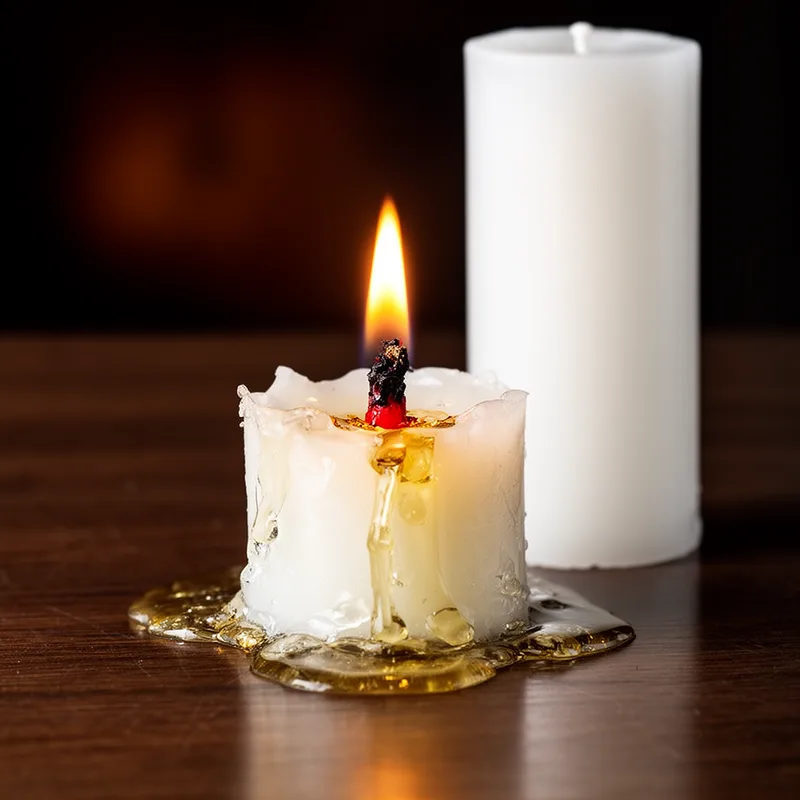
to burn away
 6
3.2
6
3.2

- phrasal verb
- /bɜrn əˈweɪ/
- Mornings were cold, but by noon the sun had burned the chill away.
- the fire burned away
- burn away the fog
- burn away the skin
Loading YouTube…
Watch on YouTubeWhat's hard to burn away is the president being walked off the stage by his wife down the stairs after that debate.
- What's hard to burn away is the president being walked off the stage by his wife down the stairs after that debate.
- I'm all that's left all anger and guilt, all those bad feelings, they burn away with time.
Examples
-
Clothes, jewelry—it’s all been burned away by the acidic process of the creatures' accelerated decomposition.
Fiction book (1998) -
Most of the debris will burn away, and the flames do subside a little bit.
-
Then he was human again, but his clothing had been burned away.
Fiction book (1992) -
The hot wind from the south literally burns them away.
-
Part of his hair has been burned away. #Kenny#
Fiction book (1998) -
I think you can just see it's burning away underwater and in a moment we hope the flame will appear.
-
The mist had burned away, and the day was sunny enough to give me a sense of optimism.
Fiction book (1991) -
The Depression years burned away any vaguely romantic notions they may have had about life.
Fiction book (1991) -
The thatch had burned away, leaving only flaming rafters and beams.
Fiction book (1992) -
As the sun rose higher, the morning fog began to burn away and reveal the landscape.
Synonyms
 ∞
1.0
∞
1.0
To be on fire or damage something with heat
 ∞
1.0
∞
1.0
To stop being seen or to no longer be there
 531
1.2
531
1.2
To slowly become less visible, bright, or loud
 463
1.0
463
1.0
To stop being seen or felt
 121
3.0
121
3.0
To destroy a building or object completely by fire
 93
4.0
93
4.0
An effect or feeling that becomes less strong and then stops
 73
2.8
73
2.8
To become part of the background and less clear
 69
3.0
69
3.0
To become weaker and then disappear over time
 38
4.1
38
4.1
Gradually become less strong until a feeling is gone
 29
4.6
29
4.6
To make a feeling or idea go away
 27
3.7
27
3.7
To be completely destroyed by fire
 18
6.6
18
6.6
To burn slowly and give off smoke without a flame
 12
3.5
12
3.5
To slowly disappear or stop existing
 8
4.2
8
4.2
To become quieter and then stop
 8
7.4
8
7.4
To burn until it turns to ash
Antonyms
How Consumed

Surface Forms
Morphology
The meaning 'to be consumed by fire or to gradually disappear' is directly and transparently compositional from 'burn' (to undergo combustion) plus the particle 'away' (indicating removal or disappearance). This verb + away construction is a common, predictable pattern in English (and parallels exist in many languages), so a B1 learner who knows the constituents should be able to infer the MWE meaning.
Etymology
Burn away comes from the image of fire slowly eating something until it is gone: the burn action destroys the thing and it goes away bit by bit. That's why we use burn away to mean 'be consumed by fire' or to 'gradually disappear', as when mist lifts or anger fades.