
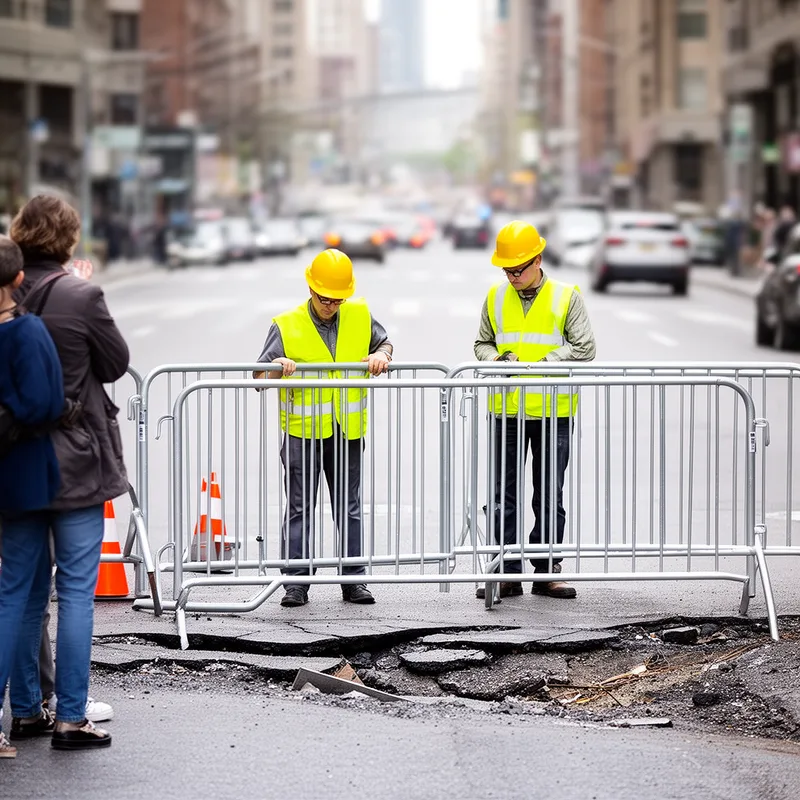
to bar off
- phrasal verb
- /bɑr ɔf/
- Informal
- To prevent unauthorized entry, the owner chose to bar off the old gate.
Examples
-
They will bar off the entrance to the building during the renovation.
-
The far end of the shed had been barred off with slats of wood, hastily, by the rough look of it.
Fiction book (1991) -
The construction crew decided to bar off the area to keep pedestrians safe.
Synonyms

 ∞
3.0
∞
3.0

To stop movement, access, or progress
 47
3.9
47
3.9
Stop people from entering or leaving an area by blocking it
 42
4.8
42
4.8
To stop people from entering a place by putting up a barrier
 31
3.3
31
3.3
To officially prevent someone from entering or taking part
 24
3.9
24
3.9
Stop people or vehicles from entering a place
 24
5.8
24
5.8
To block off an area with people or barriers to keep people away
 23
3.8
23
3.8
Close a road, path or entrance so people cannot go through
 20
6.3
20
6.3
Stop people entering or leaving an area by using police and barriers
 9
6.0
9
6.0
To stop people and goods entering or leaving a place, often during war
 4
3.7
4
3.7
Surround an area with a fence to stop people from entering
 4
3.8
4
3.8
To stop movement through a road, pipe, or path
 3
4.8
3
4.8
To keep people out of an area by putting ropes around it
To separate people or part of a place by putting up a barrier
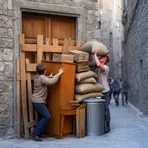
To block a place with things to stop people from entering
Antonyms

How Blocked

Surface Forms
Morphology
The meaning 'to block or restrict access' is directly derivable from 'bar' (to obstruct) combined with the particle 'off' which signals separation or closure (as in 'close off' or 'block off'). This construction follows a common verb + particle compositional pattern that a B1 learner who knows both constituents would readily interpret.
Etymology
Bar off comes from the simple image of laying a heavy bar across a door or gate to keep people out. That's why it now means 'to block or restrict access' to a place.