
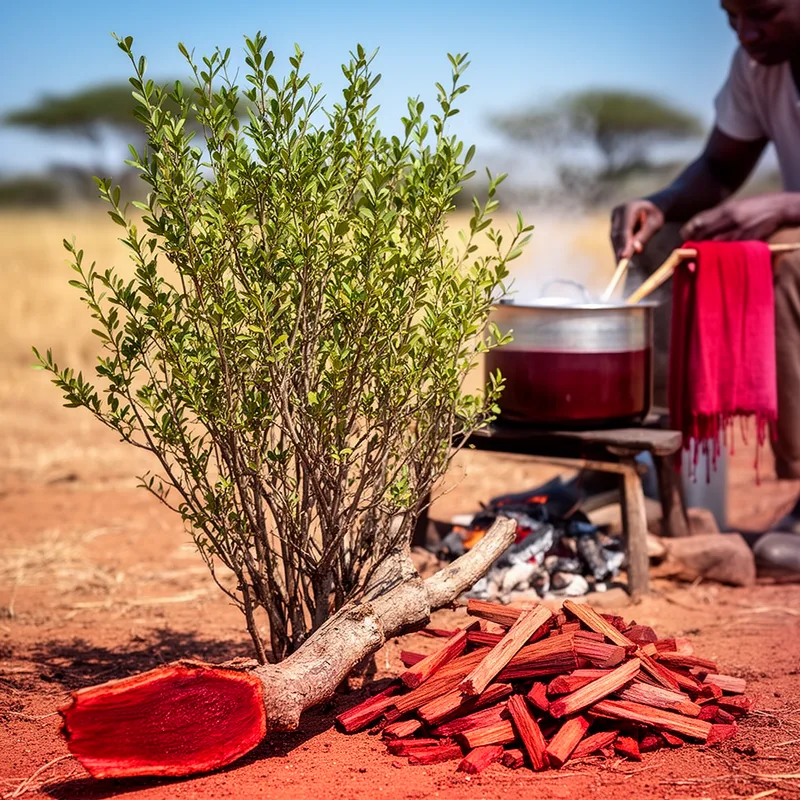
African sandalwood
- noun
- South African
- The wood of the African sandalwood is prized for both carpentry and its deep red dye.
Examples
-
The African sandalwood tree provides a rich red dye that is popular among local textile makers.
-
Due to its durability, the wood from the African sandalwood is often used in furniture making.
-
Botanists study the African sandalwood for its unique properties and ecological importance.
-
Local artisans use African sandalwood to create vibrant traditional textiles.
-
The African sandalwood tree is known for its dense wood.
-
Many artisans use African sandalwood to create beautiful crafts.
-
Artisans carve intricate designs from African sandalwood, showcasing its beautiful grain and color.
Synonyms
A small African tree with hard red wood that people use to make red dye

A small shrubby West African tree with hard wood people use to make red dye
A tree from India and Southeast Asia that has hard dark red wood used for furniture and dye
A tree from India with hard fragrant wood and dark red inner wood used for dye

A tree from India with hard, fragrant wood used for furniture and red dye
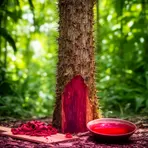
A tropical tree with a prickly trunk and dense red wood used for dye

A tropical tree with hard reddish wood used to make dyes and violin bows
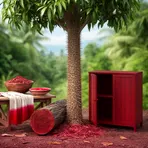
A tropical tree with a prickly trunk that has heavy red wood used for cabinets and a red dye
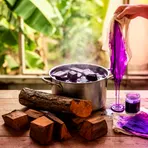
Very hard brown wood from a tropical tree used to make deep purple dye
Surface Forms
Morphology
The phrase is a straightforward noun phrase where 'African' specifies the origin of 'sandalwood'—i.e., sandalwood that comes from Africa. This compositional modifier + noun pattern is cross-linguistically common and would be immediately understandable to a B1 learner who knows both constituents.
Etymology
African sandalwood may come from African (where the plant grows) and sandalwood (a word for useful, often fragrant wood), because people used this small tree's hard wood to make a deep 'red dye'. That's why the name now means a small African tree prized for its hard wood and its 'red dye'.

