
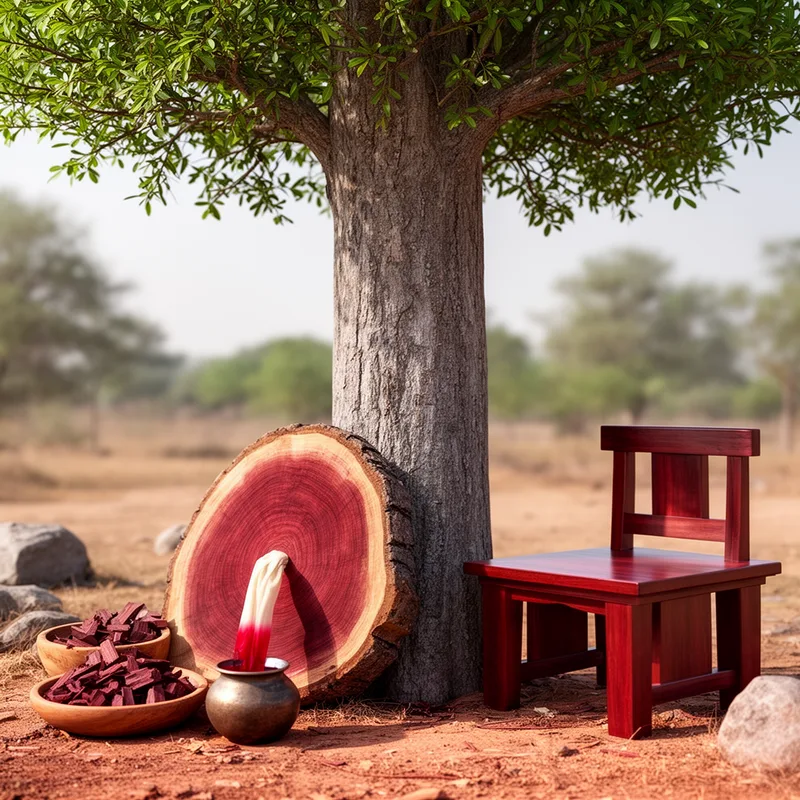
Pterocarpus santalinus
- noun
- Specialized
- Furniture made from Pterocarpus santalinus is valued for its rich color and durability.
Examples
-
Artisans prize Pterocarpus santalinus for its fragrant timber, ideal for fine woodworking.
-
The dye extracted from Pterocarpus santalinus heartwood was once widely used in textiles.
-
Due to over-harvesting, Pterocarpus santalinus is now considered a vulnerable species.
-
The Pterocarpus santalinus tree grows predominantly in India.
-
Many artisans prefer Pterocarpus santalinus for its rich color.
-
The heartwood of Pterocarpus santalinus is often used to create beautiful furniture.
-
In traditional dyeing processes, Pterocarpus santalinus is valued for its dark red extract.
Synonyms
A tree from India with hard fragrant wood and dark red inner wood used for dye

A tree from India with hard, fragrant wood used for furniture and red dye
A tree from India and Southeast Asia with hard wood and dark red inner wood used for furniture and dye

A tree from India and Southeast Asia that people grow for its hard red wood
Surface Forms
Morphology
Pterocarpus + santalinus
The binomial form makes it clear this is a species of the genus Pterocarpus, so a learner who knows 'Pterocarpus' can infer it refers to a kind of tree. However, 'santalinus' is not transparently meaningful here (and the specific properties — native range, timber qualities, red heartwood used as dye — are technical details not derivable from the name), so the full sense is only partially accessible.
Etymology
Pterocarpus santalinus may come from parts that picture the tree: ptero 'wing' and carpus 'fruit' because its seed pods look like small wings. santalinus links the tree to 'sandalwood' for its deep red, fragrant heartwood, and that's why the name helps you remember a tree valued for red timber and dye.

