

red sandalwood
- noun
- Indian
- The red sandalwood tree is native to India.
Examples
-
Can you identify the red sandalwood tree?
-
Many antique cabinets from the region are made of red sandalwood due to its durability and fragrance.
-
The furniture was crafted from red sandalwood, giving the room a rich, warm hue.
-
Traditional dyes derived from red sandalwood are still valued in textile industries today.
-
Many antique cabinets are crafted from red sandalwood because of its stunning color and durability.
-
The warm, rich hue of the furniture made from red sandalwood added elegance to the room.
-
In traditional crafts, artisans often use red sandalwood for its fine quality and sought-after fragrance.
Synonyms
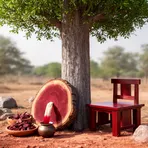
A tree from India and Southeast Asia that has hard dark red wood used for furniture and dye

A tree from India and Southeast Asia with hard wood and dark red inner wood used for furniture and dye
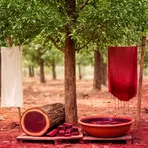
A tree from India with hard fragrant wood and dark red inner wood used for dye

A tree from India with hard, fragrant wood used for furniture and red dye
Surface Forms
Morphology
red + sandalwood
The phrase is a straightforward color + noun combination: 'red' modifies 'sandalwood', so a learner who knows both words will infer it refers to sandalwood that is red (or the tree producing red wood). This adjectival composition is a common, cross-linguistic pattern and thus immediately comprehensible rather than idiomatic or metaphorical.
Etymology
The tree red sandalwood was named for the same reason: its trunk has a deep red heart and it is like other sandalwood trees. Because people used this bright 'wood' for dye and decoration, the name now also refers to the 'tree'.

