
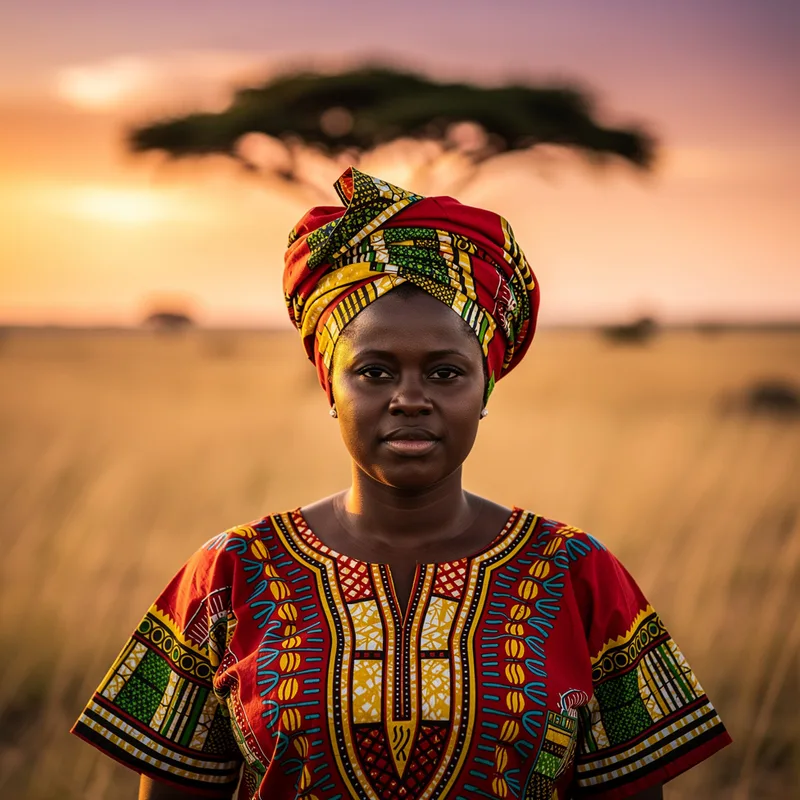
African
 ∞
1.0
∞
1.0

- adjective
- /ˈæfrɪkən/
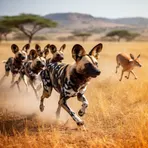
- The wild dogs, the African wild dogs, always hunt in groups.
- African American
- African Americans
- African and Hispanic
Loading YouTube…
Watch on YouTubeYou may well ask why focus on African women as change agents?
- You may well ask why focus on African women as change agents?
- Kamala Harris's father is of African ancestry in part.
- But the problem, I think, is that African governments change.
- That's not an African subgroup because the African subgroups have tribal names.
- So ask them, well, how many African countries are in the United Nations?
- Not least because now African states are talking of withdrawing.
- You could have some, like maybe some African history to it or some native history.
- And I like to think that Dan turned that African moment into today.
- Oh, God, me and seven authentic African pygmy dancers.
Examples
-
Art & Soul also hosted a traveling exhibition of African sculpture from the Art Institute's collections.
Academic text (2011) -
Tell your congregation that they should celebrate the first African Pope in the history of the church.
-
You may well ask why focus on African women as change agents?
-
But they also have that African influence you need a little.
-
And I like to think that Dan turned that African moment into today.
-
But the problem, I think, is that African governments change.
-
There is an African plant called the Iboga plant.
-
But I usually go to this really cute African braiding salon by my house.
-
Essentially, Lake Turkana is an African Arrow Sea in the making.
-
Many talented African artists gather in the city for an annual cultural festival.
Compounds
 220
1.3
220
1.3
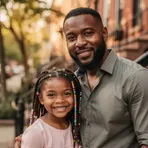
A person in the United States whose family comes from Africa, often for many generations
 199
2.8
199
2.8
A person in the United States whose family came from Africa, often brought there as slaves


- South African
3
1.7
A very large gray land animal with a long trunk, big ears, and long tusks

- South African
1
4.3
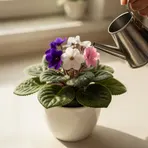
A small African plant with soft fuzzy leaves and violet, white, or pink flowers kept indoors
 1
3.7
1
3.7
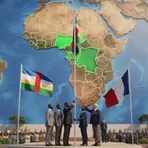
A landlocked country in central Africa that became independent from France in 1960


 1
6.7
1
6.7
A water frog from Africa without a tongue that has claws and is often used in labs

- US
1
5.2
A medium-sized grey parrot from Africa that is very intelligent and copies human speech


A plant with bright green leaves and clusters of deep blue flowers often grown in gardens

A bushy plant that lives for many years and has white or violet flowers with blue centers


The money used in the Central African Republic is the same as the CFA franc used by several countries

A tall African tree with wood that smells nice and lasts a long time for making furniture and houses

- Specialized
A way of speaking English used by many Black people in the United States

- South African
A South African plant whose long, strong leaves people use to make rope

- Specialized
A way of speaking English used by many African Americans with its own grammar, words, and sounds

- Specialized
A lizard from Africa that can change color and move its eyes separately

- South African
A large, dangerous crocodile that lives in African rivers and lakes

- South African
A small snake that lives in trees in southern Africa with black and orange bands


- South African
A monkey that lives on the African savanna with greenish-grey fur and a yellow tail

- South African
A wild dog-like animal from northern Africa related to jackals and wolves
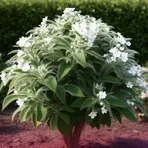
- South African
A large shrub with many hairy branches, large hairy leaves and white flowers

- Indian
A small bush from Africa and southern Asia with silvery branches, blue or white flowers, and red berries


- South African
A plant from Africa with green leaves and large groups of violet-blue flowers


- South African
A grass from South Africa that grows in clumps and is often planted to stop soil erosion

- South African
A tree from Africa with hard reddish-brown wood used for furniture and building
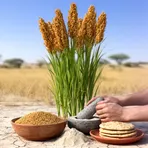
- Indian
A plant that grows in dry regions and has seeds used to make a somewhat bitter flour

- South African
A body treatment from Africa that uses hand movements to relax muscles
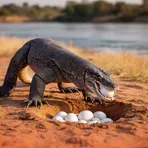
- South African
A large meat-eating lizard found in Africa with a strong body and long tail

- South African
A tall tropical tree from West Africa whose fruit is used to make palm oil
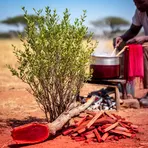
- South African
A small African bush with hard red wood that people use to make dye

- South African
A tree from Africa with lightweight, reddish-brown wood that smells like cedar

- NSFW
Leaves of a plant that people chew or brew as tea to feel more awake and a little happy

- Offensive
A relaxed way of keeping time when people often arrive later than planned

- South African
A tropical tree with bright green leaves and large orange-red flowers
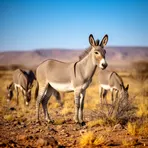
- South African
A wild donkey from dry northeastern Africa that is the ancestor of the domestic donkey


- South African
A South African tree or shrub with a rounded crown and strong, beautiful wood

- South African
A tree or shrub from southern Africa with strong yellow wood used for furniture


How African

Surface Forms
Morphology
Etymology
African comes from the name Africa, which the Romans used for the continent. A helpful way to remember it is that African means 'from Africa' or 'relating to Africa', so we use it for peoples, cultures, and things of that continent.