
blue African lily
- noun
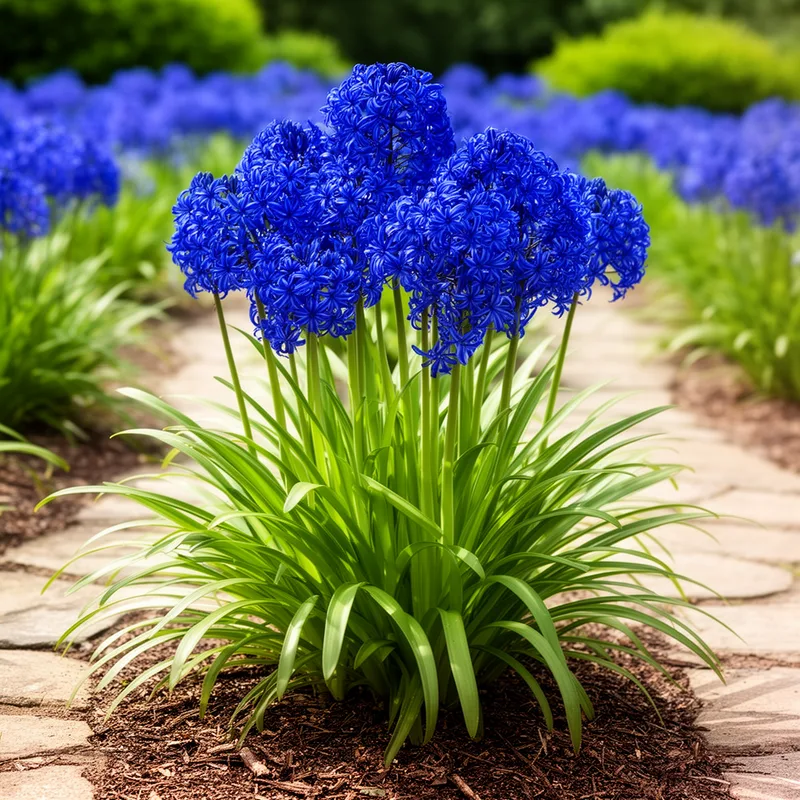
- Gardeners admire the blue African lily for its bright, deep violet-blue flowers and evergreen leaves.
Examples
-
She planted a row of blue African lily along the walkway for a dramatic effect.
-
The blue African lily blooms beautifully in spring.
-
Gardeners admire the blue African lily for its resilience and vibrant blooms.
-
The blue African lily adds striking color to summer gardens.
-
I love the blue African lilies in my garden.
-
She planted several blue African lilies in her yard to enhance the landscape with vivid color.
-
The blue African lily thrives in sunny conditions, making it a popular choice for ornamental gardens.
Synonyms


 1
9.3
1
9.3
A tall plant with round groups of blue or purple flowers

A South African plant with long green leaves and round groups of deep blue flowers

A plant from Africa with green leaves and large groups of violet-blue flowers

A garden plant with round groups of blue or purple flowers
Surface Forms
Morphology
The phrase denotes a lily that is blue and from Africa, which is directly and transparently composed from the adjectives 'blue' and 'African' modifying the noun 'lily'. This straightforward adjective+noun composition follows common cross-linguistic patterns, so a B1 learner who knows the constituent words would readily infer the meaning.
Etymology
Blue African lily comes from a simple picture: the plant has bright blue flowers, comes from Africa, and looks like a lily. So the name now 'means a garden plant with deep blue, lily-like flowers from Africa' used for decoration.