
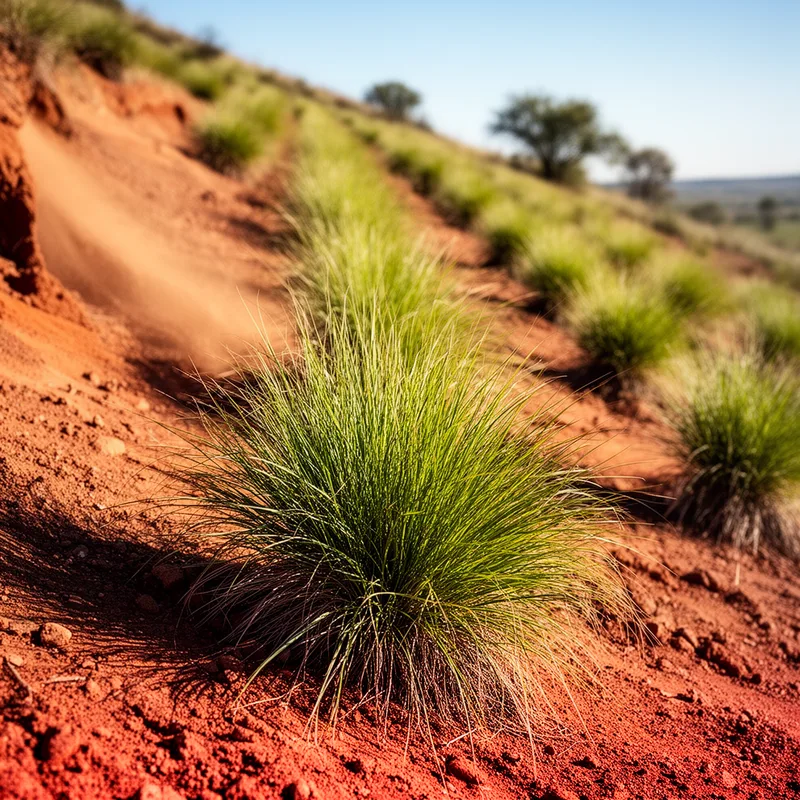
African love grass
- noun
- South African
- Many farmers use African love grass for erosion control.
Examples
-
The rapid spread of African love grass has raised concerns about its impact on native species.
-
Researchers are studying how African love grass adapts to new environments outside South Africa.
-
Many ranchers use African love grass to prevent soil erosion in pastureland.
-
The African love grass is known for its resilience.
-
Many ranchers use African love grass to prevent soil erosion in pastureland.
-
Farmers across the region have introduced African love grass to help stabilize sandy soils.
-
Experts recommend planting African love grass as it effectively controls erosion on hillsides.
Synonyms
A grass from South Africa that lives for many years and is used to stop soil erosion

A grass that lives for many years from South Africa and grows in dense clumps to stop soil erosion
Surface Forms
Morphology
The combination 'African' + 'grass' makes it clear to a B1 learner that this is a type of grass associated with Africa, so the basic referent (a grass from Africa) is transparently recoverable. However, 'love' functions as part of the established common name 'lovegrass' rather than contributing a predictable literal meaning, and the specific botanical sense (a particular perennial species with erosion-control uses) is not derivable from the parts alone.
Etymology
African love grass may get its name because it comes from Africa and because people and grazing animals 'loved' its soft, clumping stems that made it useful as pasture. That's why the name now refers to this African grass often planted to hold soil and feed animals.

