
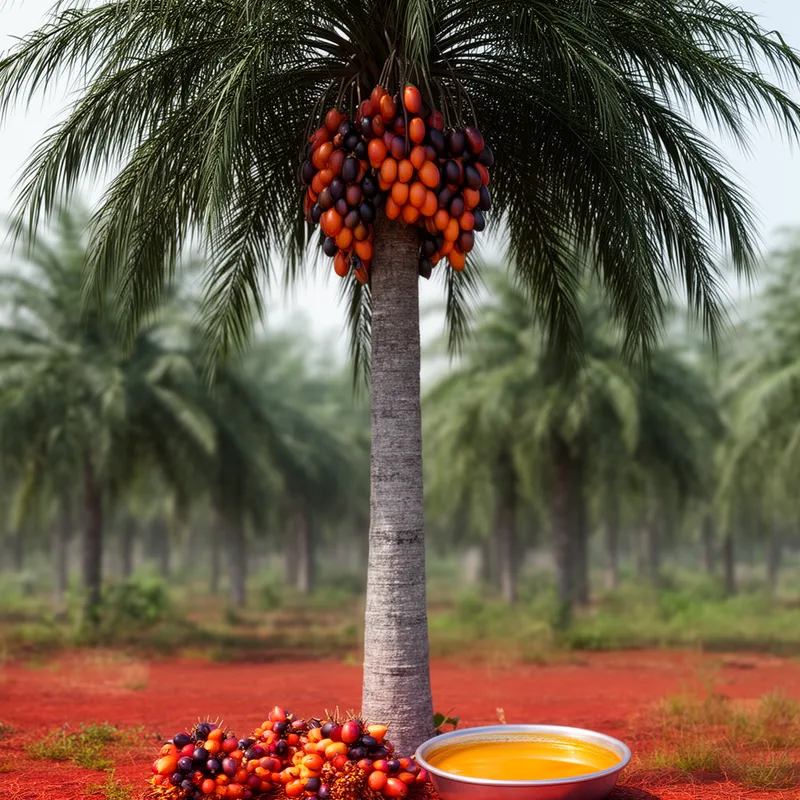
African oil palm
- noun
- South African
- Farmers in West Africa grow African oil palm to produce palm oil for cooking and industrial use.
Examples
-
There are 239 AS events conserved between banana, African oil palm, and at least one grass species, while an additional 204 AS events conserved between banana and African oil palm are absent in the grass species examined and were likely lost.
Academic text (2017) -
Oil yields are very high (3 tons per hectare), and may someday compete with African oil palm.
Blog text (1) -
There are 239 AS events conserved between banana, African oil palm, and at least one grass species, while an additional 204 AS events conserved between banana and African oil palm are absent in the grass species examined and were likely lost.
Academic text (2017) -
The African oil palm is widely cultivated in tropical regions for its oil-rich fruit.
-
The African oil palm tree thrives in humid climates and can produce fruit throughout the year.
Synonyms
 1
3.6
1
3.6

A tropical palm tree with long leaves that produces red fruit used to make oil

A tropical oil palm tree from West Africa grown for its oil-rich fruit
Surface Forms
Morphology
The noun phrase is fully compositional: 'African' specifies origin, 'oil' indicates the tree's association with oil, and 'palm' names the tree. A B1 learner who knows these constituents can infer it is a palm tree from Africa used/valued for its oil, and this modifier+noun pattern is cross-linguistically common, so the expression is immediately understandable.
Etymology
African oil palm is named for a palm tree from Africa whose fruit is full of oil. Because people press the fruit to make cooking 'oil', the name now means the palm grown for its oil.