

to unpeel
 1
3.4
1
3.4

- verb
- /ʌnˈpil/
- unpeeled potato
- unpeeled garlic
- unpeeled cucumber
Examples
-
We sat unpeeling the red foil.
Fiction book (1998) -
She took it, unpeeled it, and began to chew without taking her eyes off him.
Fiction book (2001) -
Go to Brother Earle's and get a potato, an unpeeled potato.
-
The apple unpeels.
Fiction book (1997) -
My lister acted very brave, but we all knew inside she was terrified. "It's not easy," said Cara, taking another orange and holding it unpeeled in the palm of her hand as if to signify that she was finished.
Fiction book (1993) -
To make the recipe easier, first unpeel the garlic cloves before adding them to the dish.
-
He carefully unpeeled the orange, revealing its juicy segments inside.
-
To prepare the vegetables, unpeel the carrots and slice them into thin rounds.
Synonyms
 126
1.0
126
1.0
Remove the outer skin from a fruit or vegetable before eating
 18
2.1
18
2.1
To remove the hard outer covering from nuts, peas, or seafood
 11
3.4
11
3.4
Remove a cover or layer by pulling it away slowly
 10
2.7
10
2.7
To remove the outer layer from a fruit, vegetable, or animal
 8
3.4
8
3.4
To take off the outer layer by pulling it
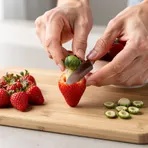 4
5.5
4
5.5
To remove the outer covering from seeds, nuts, or fruit
 3
4.8
3
4.8
To cut away the thin outer layer or the edges of things like fruit and wood
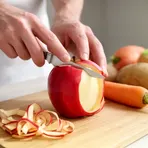
To remove the outer skin from fruit or vegetables

To remove the outer skin from fruit or cheese

To remove the outer shell from seeds and grains like rice or beans

To remove the outer layer or covering from something, for example the bark of a tree
How Thorough

Surface Forms
Morphology
Etymology
Unpeel comes from the parts un- 'remove' and peel 'to take off a skin', so imagine pulling the skin off an orange or a sticker. That's why to unpeel something is to remove its outer covering.