
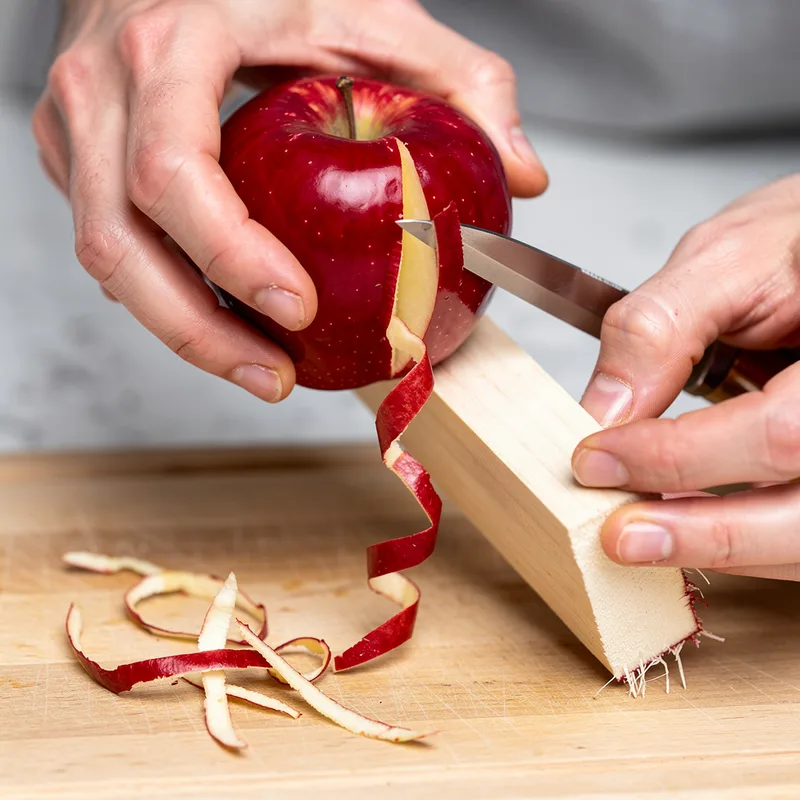
to pare
 3
4.8
3
4.8

- verb
- /pɛr/
- Cut off thorny tips and pare away fibrous green layers from the bottoms.
Examples
-
Bernice is in the kitchen, paring apples for pie, when Melanie comes home.
-
My mother was paring potatoes at the sink.
Fiction book (1992) -
Her sharp fingernail pares off a minute edge of paint.
Fiction book (1990) -
I finished paring the last carrot and went to put the peelings into the garbage can.
Fiction book (1992) -
Locked in a damp room, insects shuffle in corners as she pares potatoes.
Fiction book (1992) -
Use the correct knife for the correct purpose; don't use a fillet knife to pare carrots or potatoes.
Blog text (4) -
In the kitchen, Aunt Sarah stands at a cutting board, paring radishes into roses with a small knife.
Synonyms
 126
1.0
126
1.0
Remove the outer skin from a fruit or vegetable before eating
 95
2.6
95
2.6
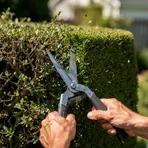
Cut something to make it smaller or neater
 25
1.9
25
1.9
Cut very thin slices from things like cheese or wood
 13
6.2
13
6.2
To cut small pieces from wood with a knife
 10
2.7
10
2.7
To remove the outer layer from a fruit, vegetable, or animal
 1
3.4
1
3.4
To remove the outer covering from things like fruit or labels
 1
9.9
1
9.9
To cut off a thin layer from leather or rubber to make it thinner
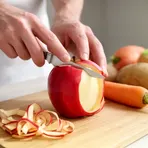
To remove the outer skin from fruit or vegetables

To remove the outer skin from fruit or cheese
Antonyms


Phrasal Verbs

How Much

Surface Forms
Etymology
Pare comes from the old Latin word parare, which means 'to prepare' and is also in the word prepare, so you can think of making something neat and ready by cutting away its outside. So, to pare is to remove the outer layer or edges to make something smaller or neater.