

to sphacelate
- verb
- /sfæˈsɛleɪt/
- Specialized
- If untreated, the infected tissue may sphacelate and require surgical removal.
Examples
-
The limb began to sphacelate after the loss of blood supply.
-
Pathologists observed that the damaged skin had sphacelated within a few days.
-
The tissue began to sphacelate after the injury.
-
In severe cases, the cells can sphacelate rapidly.
-
If untreated, the infected tissue may sphacelate and require surgical removal.
-
The limb began to sphacelate after the loss of blood supply.
-
In severe cases, the cells can sphacelate rapidly.
Synonyms


 1
9.9
1
9.9
To die because it loses blood or gets a serious infection
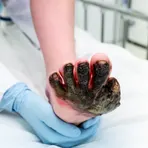
To die and decay because of injury or disease

To become dead tissue because of infection or loss of blood
Antonyms

How Damaged

Surface Forms
Morphology
sphacelate = sphacelus (opaque) = sphacel + ate
Formed from the obscure medical base 'sphacelus' plus the verb-forming suffix '-ate'; the base is technical and not recognizable to average learners, so the meaning is not derivable.
Etymology
The word sphacelate comes from an old Greek word for 'gangrene', so it means living tissue that dies and becomes rotten or gangrenous.